Wind Turbine Transport in Madeira: What Drivers Should Expect
Turbine blades and tower sections are being hauled up to Paul da Serra until the end of September, mostly overnight and under police escort, and the roads that feel it are the ones climbing from the south coast to the plateau.
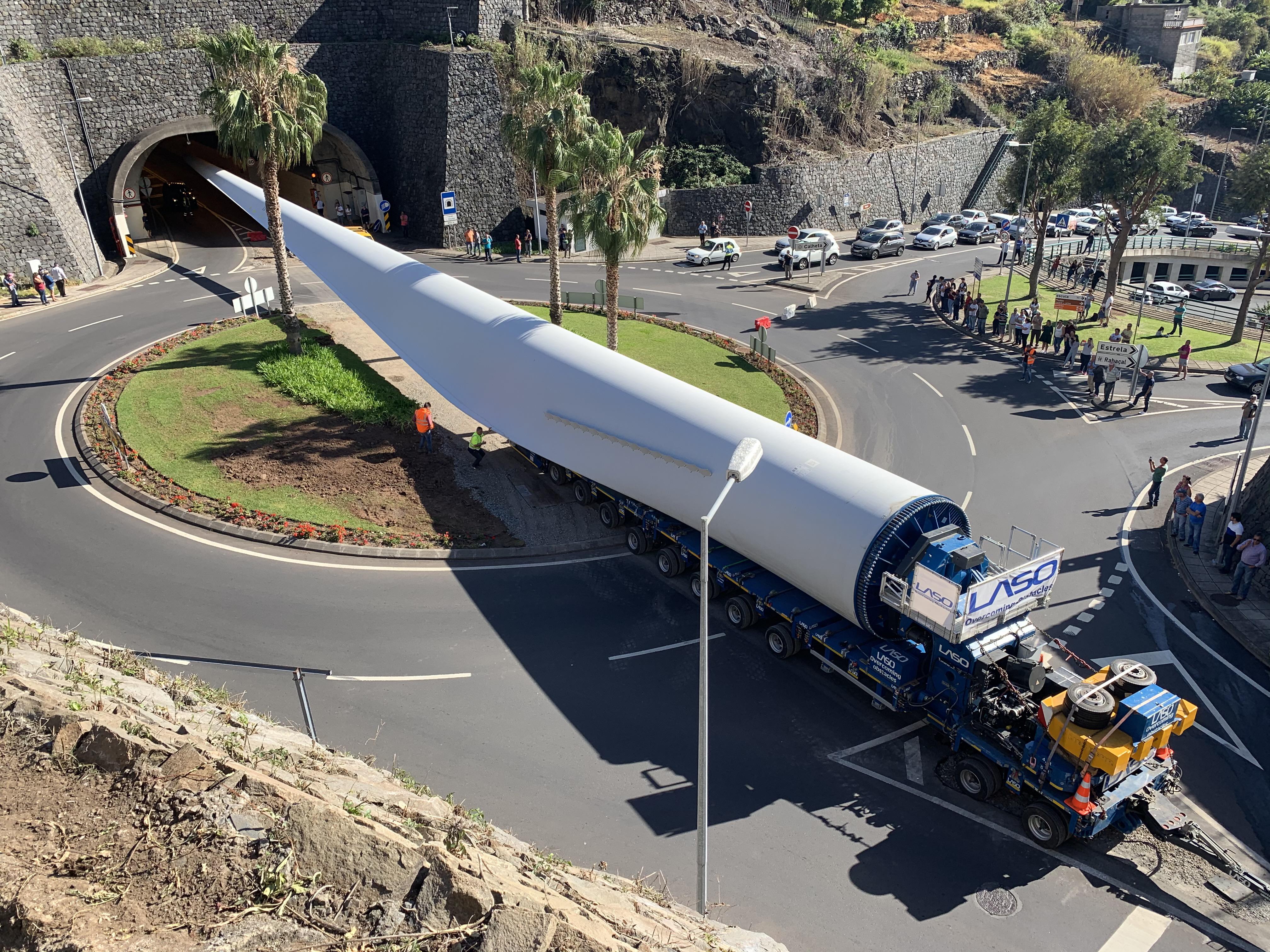
Three Turbines Bound for the Plateau
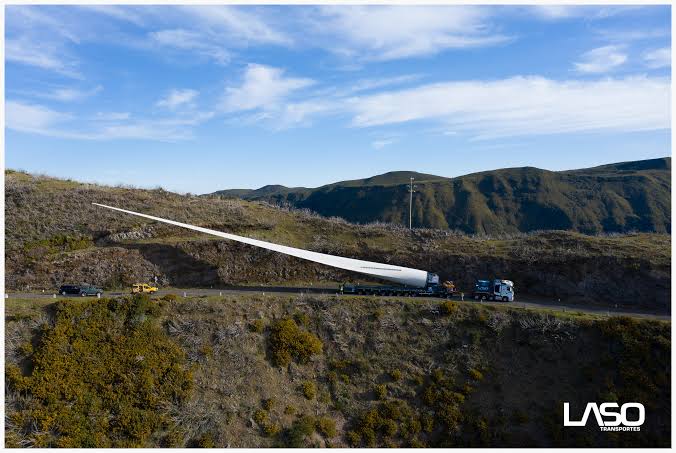
The operation began on 4 August and is run by ENEREEM, the renewables company within the EEM group. Two new turbines are going up at the Loiral III wind farm, with a combined capacity of 7.6 MW. At the Paul wind farm nearby, five machines that have reached the end of their working lives are being replaced by a single turbine of 3.8 MW.
What has to reach the plateau is the awkward part: blades, tower sections and the other large components that make up a turbine. The heavy haulage firm LASO Transportes is handling three tower sections. The wider contract covering both farms, spread across the municipalities of Calheta and Ponta do Sol, was awarded by public tender for 19.65 million euros in August 2025, with 435 days to complete.
Most of It Happens After Dark
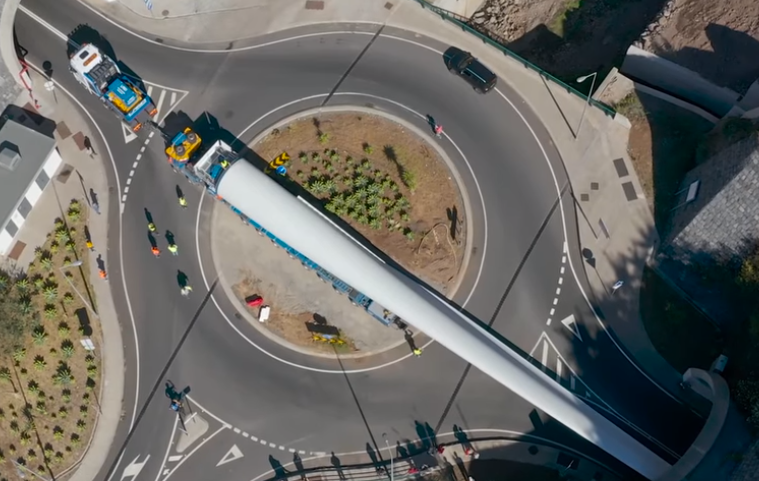
The Regional Secretariat for Equipment and Infrastructure, through ENEREEM, says the transport will be carried out at night "whenever possible" to keep the effect on traffic down, though the timetable can be adjusted for operational, weather and safety reasons. On the ground that means a slow convoy, a police escort, temporary signage and officers waving traffic through or holding it back.
The roundabouts are the pinch points. On 8 August a turbine section came through the roundabout at Tábua with a PSP escort. When components were taken up to Paul da Serra in 2020, kerbs and sections of road surface were lifted to let the loads round the corners and then put back afterwards, and the same approach applies now.
Leave Earlier, Then Forget About It
The VR1 along the south coast is not really where the problem sits. The pressure is on the regional roads that climb from Ribeira Brava, Tábua, Calheta and Ponta do Sol up onto the plateau, and on the roundabouts feeding them. Disruptions are described as occasional rather than continuous, and no closures have been announced in advance for specific dates.
For most visitors this will be a non-event. It matters if you have an early start: a sunrise walk at Rabaçal or Fanal, or a first-flight run to the airport from the west. Allow an extra half hour, check local traffic before you set off, and do what the officers on the ground tell you rather than trying to squeeze past a convoy. If you are staying with us on the west coast, you are on the side of the island the loads are climbing, so it is worth a glance at the road before any early departure.
More Wind, But Not a Cheaper Bill
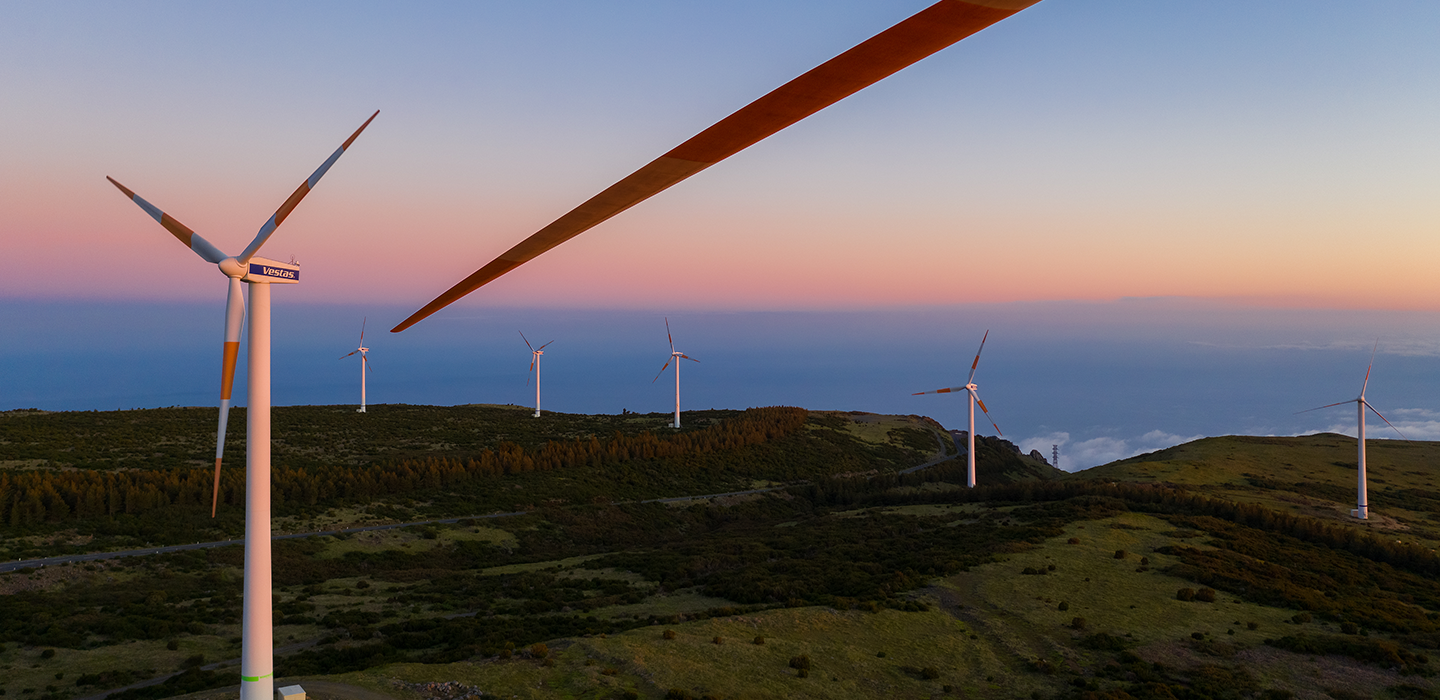
Loiral III is an expansion, so those 7.6 MW are genuinely new. Paul is a replacement, where one modern machine takes over from five old ones, so that half of the work is about efficiency rather than raw capacity. Both reduce the share of Madeira's electricity that has to be made from imported fuel, which is the point of the regional government's investment.
What it will not do is lower your electricity bill. Madeira's tariffs are set annually by the national regulator ERSE, and a convergence mechanism keeps regional prices close to mainland ones. For 2026, ERSE calculated that covering the region's own costs would have required an increase of 48.2%; with convergence applied, the approved change was 0.4%. The generation mix changes underneath, the tariff does not follow it directly.
The turbines will be turning on the plateau long after your holiday. Until the end of September, just leave a little earlier.