Madeira's Surf Season: Is October a Good Time to Surf?
Bring a board to Madeira in October and the surf season gives you its warm, workable half rather than its famous one: this week the north coast ran 1.5 to 2 metres with the sea at 23 to 24 °C. The swells that made Madeira’s name arrive from now on. Here is what the month gives you, and how to read the day.
October Starts Soft and Turns Without Much Notice
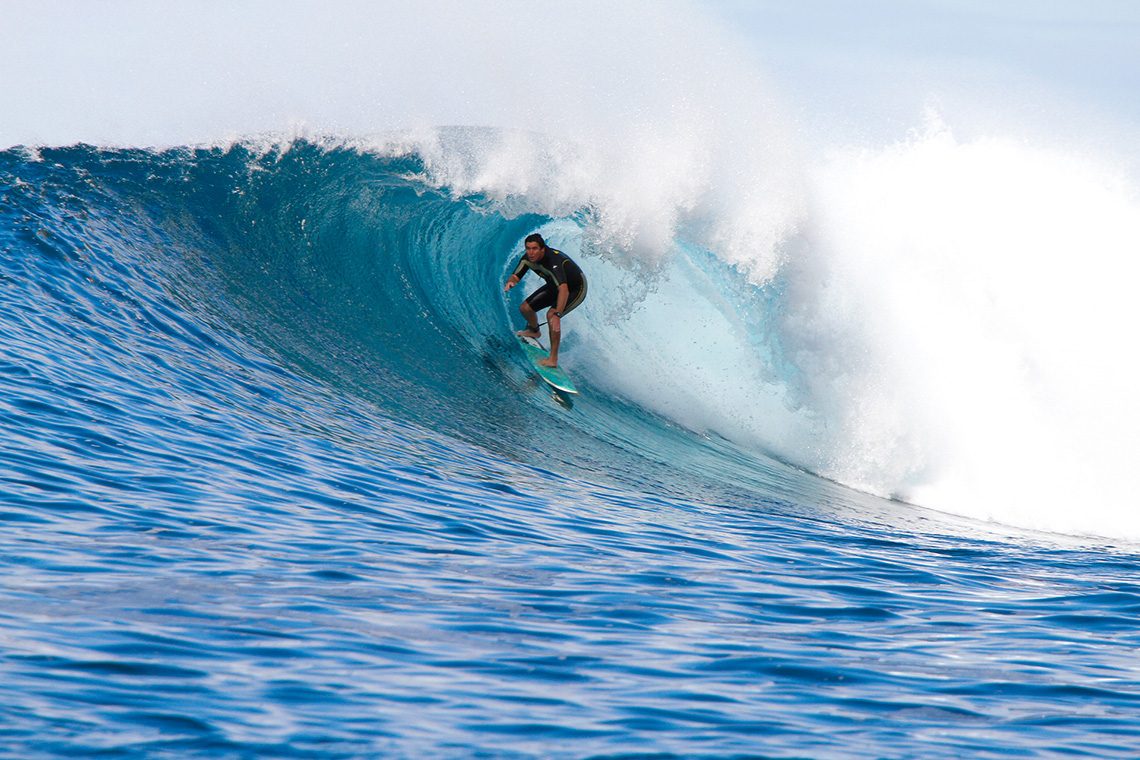
The daily sea state tells you more than any seasonal rule. On Friday 16 October the IPMA forecast put northwest waves of 1.5 to 2 metres on the north coast, about 1 metre on the south, and the water at 23 to 24 °C. That is the island on its own average: Visit Madeira puts the year-round average swell at 2 metres. Our month-by-month guide has October at 23 °C in the water and the island at its emptiest.
October does not promise to stay there: on 7 October 2024 the IPMA put the north coast and Porto Santo under a yellow warning for northwest waves of 4 to 4.5 metres. Two weeks either side of that, the same coast is a beginner lesson.
Winter is when that scale stops being occasional: the Capitania do Porto do Funchal warned of 4 to 5 metres on the north coast on 17 January this year, and again on 25 February. Come between December and April for the island at its biggest; come now to surf most of the days you are here.
Porto da Cruz to Learn, the West Coast to Test Yourself
Porto da Cruz, on the northeast coast, is where to start. Its two surf beaches, Alagoa and Maiata, are black sand with a sandy bottom and a consistent swell, which is why Visit Madeira rates the spot for beginners and intermediates, and why several surf schools work that stretch of coast.
Everything else is a step up. Paúl do Mar and Ribeira da Janela are reef breaks with constant, big, tubular waves that the regional tourism board puts squarely at advanced and expert surfers, and Machico, Jardim do Mar, Achadas da Cruz and Fajã da Areia in São Vicente ask much the same of you. Reef means rock under you, which is something to settle when you pick the board and the tide, not on the slipway.
A Board Costs from €30 a Day, a Lesson from €60
Visit Madeira sends visitors to two places to book: Clube Naval do Seixal in Porto Moniz and Madeira Surf Center in São Vicente, both on the north coast. Both were working this week, helping run the closing stage of the 2026 adaptive surf tour at Praia do Seixal on Saturday. The competitive season ended there on 29 August, at the São Vicente Surf Fest OPEN, where Joana Andrade took the 2026 absolute regional title.
On the west coast you can skip the shop entirely: Orlando Pereira’s self-service container in Paúl do Mar is booked online on the day, up to half an hour ahead; the access code is emailed when you pay and works for about thirty minutes. Boards run from €30 for 24 hours, €40 for a performance board, on a €250 or €350 card deposit, with lessons from €60. The fleet goes from an 8’0 softboard to a 5’10 groveler, leash and fins included, with wetsuits, boots and helmets as extras. At 23 °C you can leave the wetsuit; over reef, pay for the helmet. Bring your own wax: the boards go out without it. Our Paúl do Mar area guide covers the village itself.
Three Checks Tell You What Kind of Day It Is
A Capitania do Porto do Funchal warning, carried by the island’s news sites the same morning, decides whether the day is on. The IPMA sea state, published with the daily forecast, gives each coast its own number. Then the picture: Surftotal runs five live cameras here, Paúl do Mar and Porto da Cruz among them.
Take the instructions literally: stay off seafronts, breakwaters, cliffs and beaches, and do not fish from the rocks, because the sea reaches ground that looks safe. On 13 December last year the north coast and Porto Santo went under a red warning for waves reaching 14 metres. The gap between the coasts is your plan B: on 8 April the north ran 5 to 6.5 metres and the south 1 to 2, so a day closed out up there is a south coast day, or a levada walk.
October is the month to get in the water. January is the month to stand on the sea wall and see why they call this the Atlantic’s Hawaii.