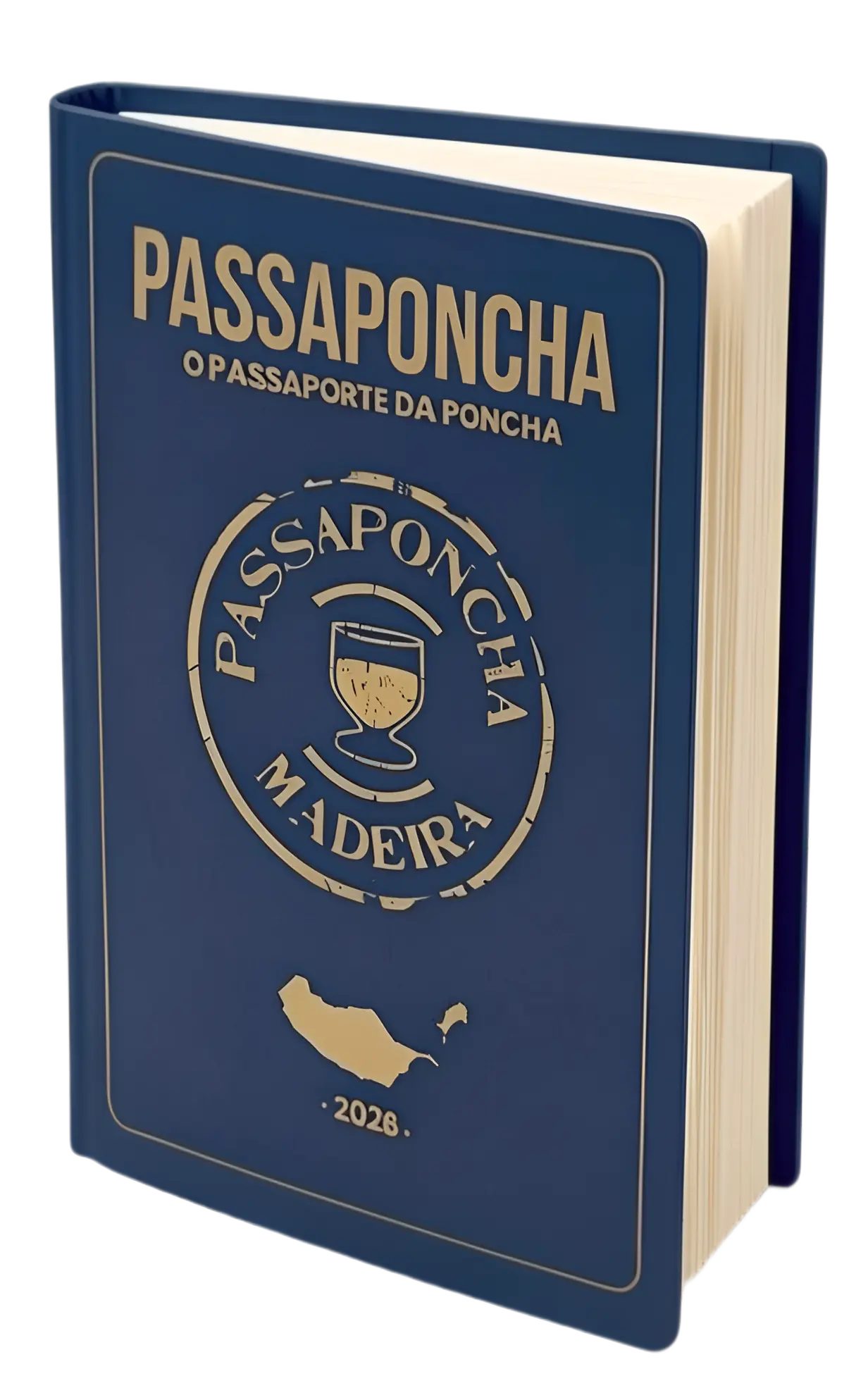
Madeira has a poncha passport. PassaPoncha launched on 4 September 2026 at Venda do Jacintinho in Campanário, and it maps a route of 24 bars from Achadas da Cruz in the far west to Caniçal in the east. Buy the booklet, order a poncha, collect a stamp.
A Stamp Costs You One Poncha
PassaPoncha keeps the instructions to three lines: buy the passport in a participating bar, order a poncha, take your stamp when you pay. The terms add the part that matters. A stamp is always tied to buying at least one poncha, so the booklet records what you drank rather than where you parked.
The stamp is not all the poncha buys you. Every bar on the list also gives holders a reward of its own, printed at the foot of that bar's page in the booklet: a small gift, a shot of poncha, a discount, an ice cream. The passport is sold in the bars themselves, and the list of participating bars is on the project's site.
Every Stamp Is Drawn for the Place It Comes From
PassaPoncha draws a different stamp for every bar on the list. Each one carries the name of the bar, the parish or local area it stands for, and an illustration taken from that place: its nature, its culture, a monument, a local tradition. The drawings have a joke in them, and every one has poncha in it somewhere, either a glass or the stick the drink is stirred with.
That is what makes a full booklet worth keeping. One drawing per bar, each tied to the place it stands in, is closer to a souvenir of the island than to a loyalty card, and it puts the value on which stamps you have rather than how many.
Poncha Is Stirred by Hand and Does Not Keep
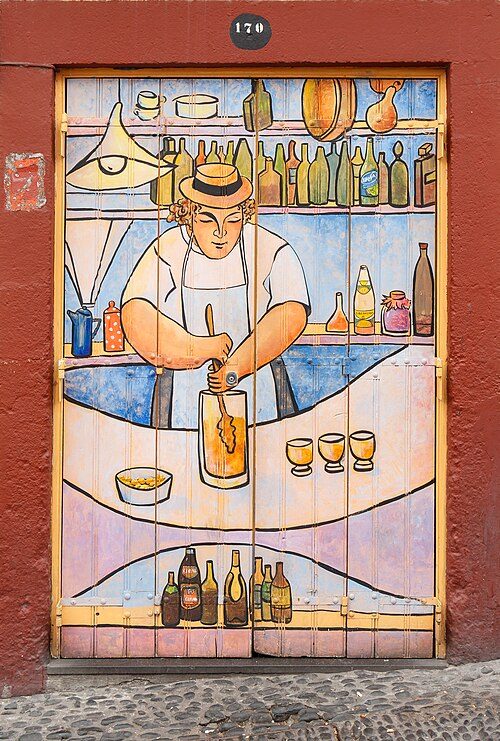
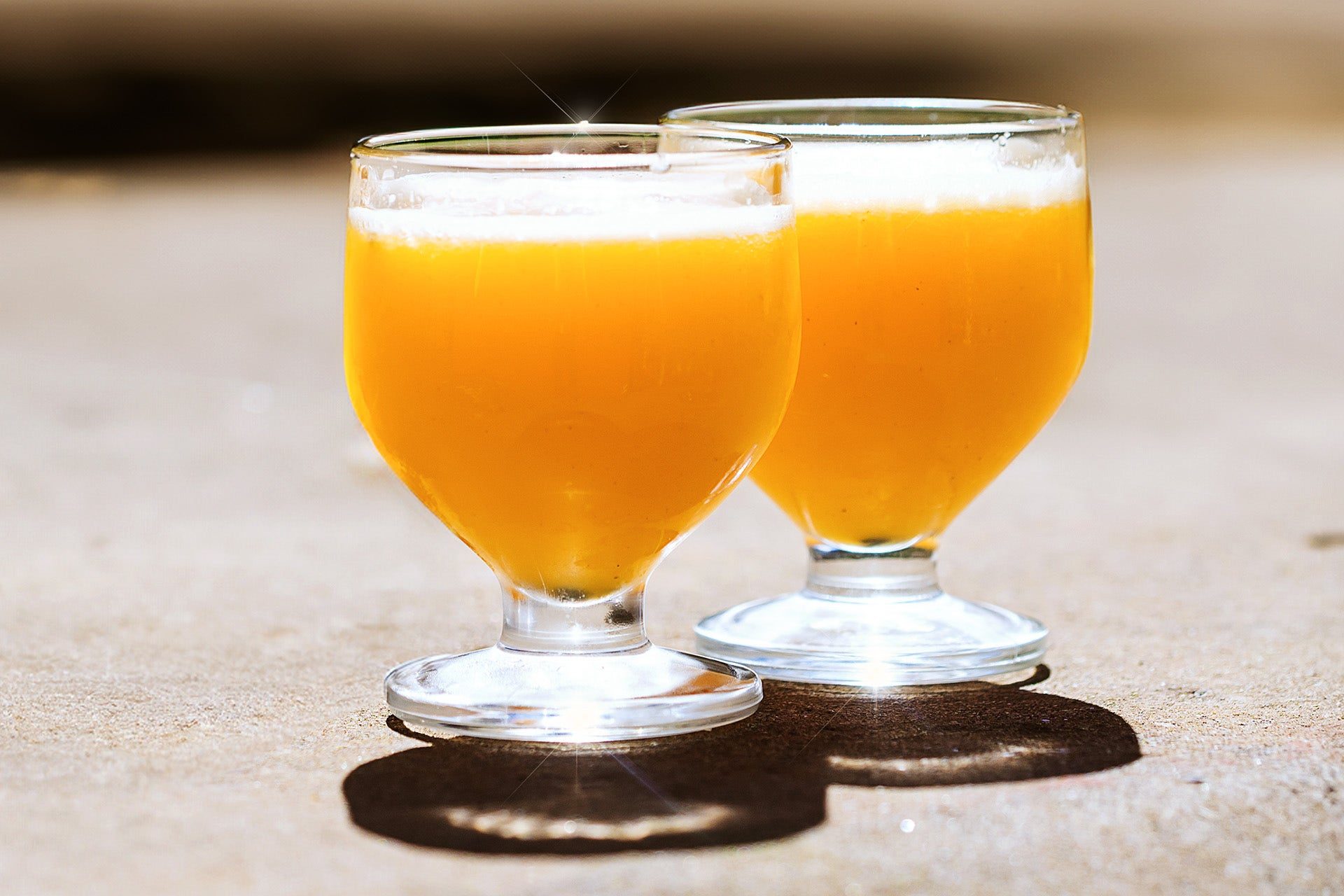
Poncha is aguardente de cana, the island's sugar cane spirit, with honey and fresh citrus juice, stirred with a mexelhote, the wooden muddler that lives on the bar top. It is mixed to order and drunk straight away, which is why it is made in front of you.
Poncha à Pescador, the version Câmara de Lobos fishermen drank to keep warm at sea, is the one Visit Madeira calls the original. You will also meet poncha regional, made with honey, orange and lemon, plus tangerine, passion fruit and mint. Poncha da Madeira is a protected geographical indication whose specification makes Madeira rum the one compulsory ingredient.
Only Three of the 24 Bars Are in Central Funchal
Four of the 24 sit in Funchal and only three of those in the centre. Everything else is a drive, which is the point of the exercise. Here is the whole route in the order PassaPoncha numbers it, starting where the passport launched.
Venda do Jacintinho in Campanário, Taberna da Poncha in Serra de Água, As Patinhas in Ribeira Brava, Bar À Quinta in Quinta Grande, A Vaquinha do Calhau in Câmara de Lobos and Os Castrinhos in Santa Rita, the one Funchal address that is not in the centre.
Then the city and the east: Sete Mares by the port, Rei da Poncha near the Sé, Bar Number Two in the Zona Velha, Adega do Pomar in Camacha, Venda do Sócio in Caniço, Bar Roque in Santo da Serra, Tasca do Samão in Caniçal, then two in Porto da Cruz: Dino's Bar in the village and Casa do Rum at the Engenhos do Norte distillery.
The north coast and the west end close it off: Bar Zeca in São Roque do Faial, Cachadinha in Santana, Bar Lúcia at Falca in Boaventura, Venda Nova in São Vicente, Banzeiro in Seixal, 101 Bar in Achadas da Cruz, Bar Formiga in Fajã da Ovelha, A Poncha do Emanuel in Arco da Calheta and The Small House in Ponta do Sol. Five of them have no page of their own, so PassaPoncha's map is where to look those up.
Check the Closing Day Before You Drive
Eleven of the 24 list a weekly closing day on PassaPoncha's map and 13 are open every day. The ones furthest from a town are the ones you least want to drive an hour for on the wrong afternoon, so read the map first.
Poncha is strong, the roads between these villages are narrow, and the gaps are long. Spread the route across a holiday rather than a day, and if you want more than one stamp in an afternoon, take a taxi or go without a car. Say yes to the dentinho; the lupins or peanuts beside the glass slow the drink down.
A Reason to Drive the Long Way Round
What makes it worth following is the shape of the list: village tascas and vendas rather than Funchal terraces, and a reason to drive to Boaventura, Achadas da Cruz or Arco da Calheta on the strength of one glass.
Twenty-four stamps is more poncha than one holiday can honestly hold, which is as good a reason as any to come back for the rest.