Best Things to Do in Madeira: A Local's Ranked Guide
Madeira is not a lie-on-a-sun-lounger island, and its best days out are active, outdoors and specific to this place: laurel forest levadas, a 580 metre sea cliff, volcanic rock pools filled by the Atlantic and whales an hour off the marina. These are the ten our own guests come home talking about, ranked by the local team and written the way we would tell you over the kitchen table.
The ten best things to do in Madeira
- Hike a levada. PR1, PR9 or PR6.
- Ride the Funchal cable car and come down by wicker toboggan.
- Go whale and dolphin watching from Funchal marina.
- Drive the west coast: Câmara de Lobos, Cabo Girão, Calheta.
- Spend a morning at Mercado dos Lavradores.
- Walk the painted doors of the Zona Velha.
- Swim the volcanic pools at Porto Moniz.
- Walk the PR8 out to Ponta de São Lourenço.
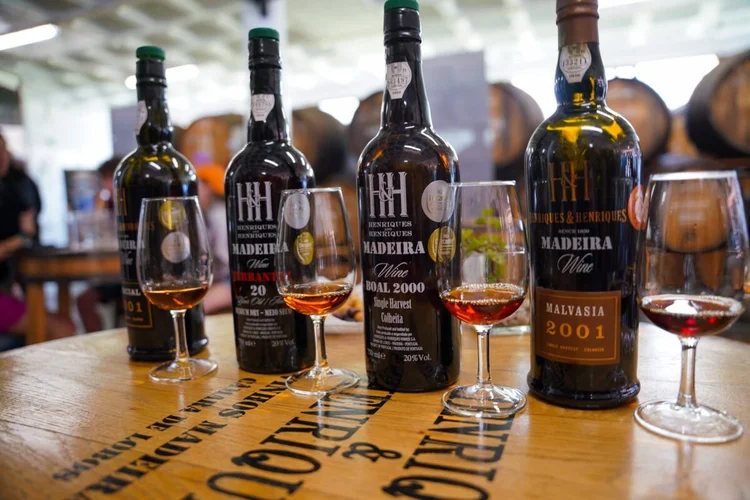
- Taste Madeira wine at a lodge in Funchal.
- Watch the sun go down from the west coast.
One of these has to be booked before you fly. Every classified PR trail now needs a SIMplifica reservation and the popular ones sell out: how to book a Madeira hiking trail.
Hike a Levada or Mountain Trail
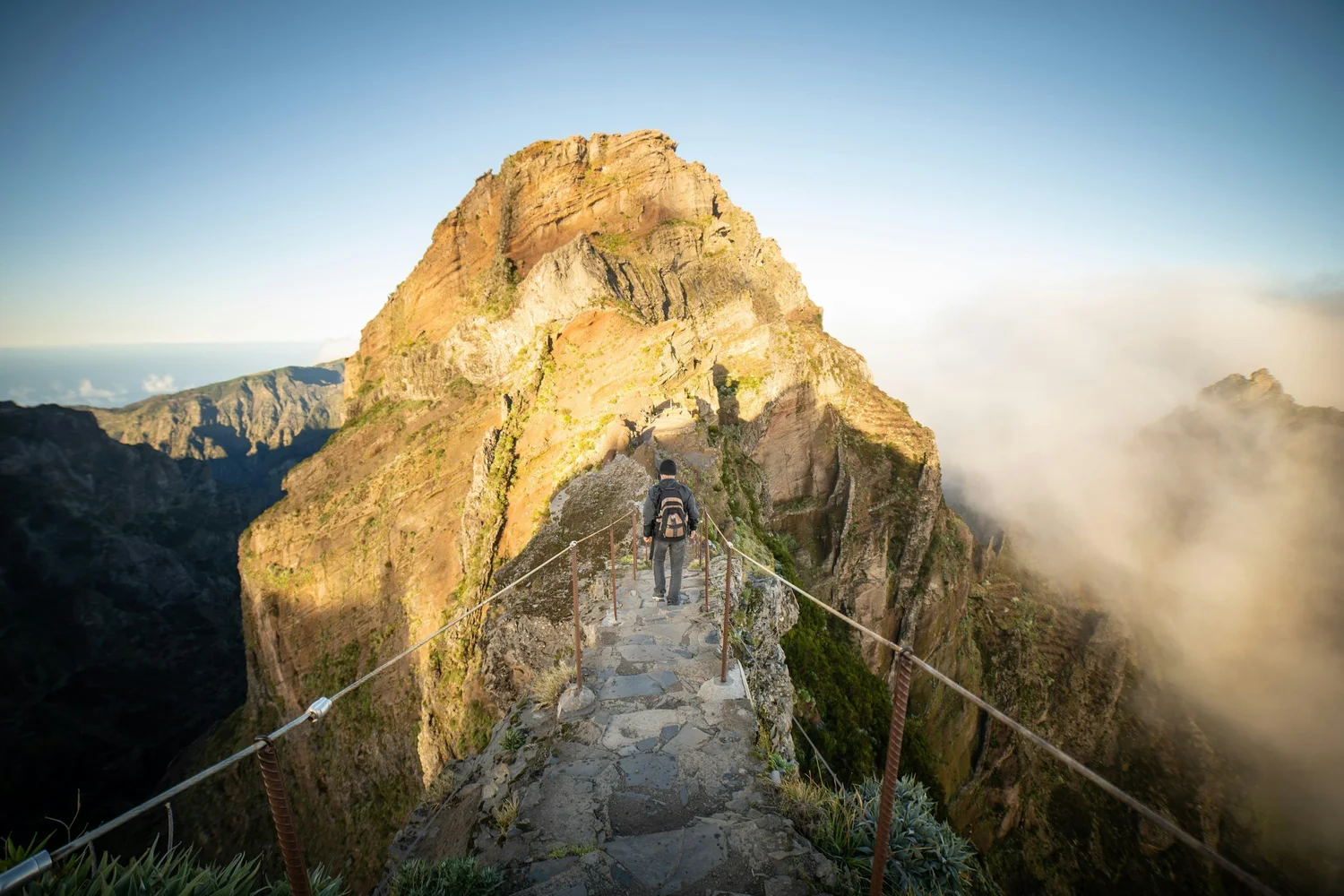
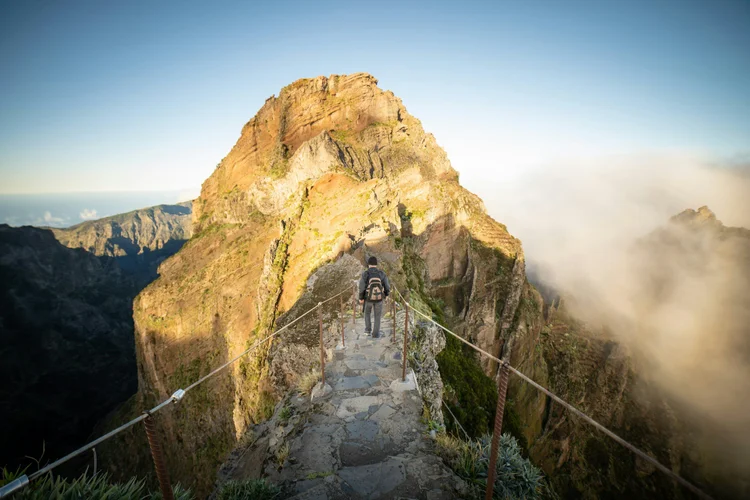
This is the single best reason to come to Madeira, and it is not close. The levadas are irrigation channels cut into the mountainside from the fifteenth century onwards, and the maintenance paths beside them are now several hundred kilometres of walking through ancient laurel forest, along volcanic ridges and into river gorges. No other easily reached European destination offers anything like it.
Three routes carry the island's reputation. PR1 crosses the high ridge between Pico do Arieiro and Pico Ruivo and is the hardest and the most spectacular. PR9 follows the Levada do Caldeirão Verde to a waterfall in a rock amphitheatre, and is the one most people fall in love with. PR6, the Levada das 25 Fontes, is the classic laurel forest walk and the busiest. Our full breakdown of distances, difficulty and when to start is in the best hikes and levada walks guide.
From January 2026 every classified PR trail requires an advance booking through SIMplifica at simplifica.madeira.gov.pt, priced between 4.50 and 10.50 euros per person. There is no on-the-day option at the trailhead and rangers do check. PR1 in particular goes weeks ahead in summer. Read the booking guide first.
If you would rather not drive to a trailhead at six in the morning, guided walks with transport included run daily.
Funchal Cable Car and the Monte Toboggan
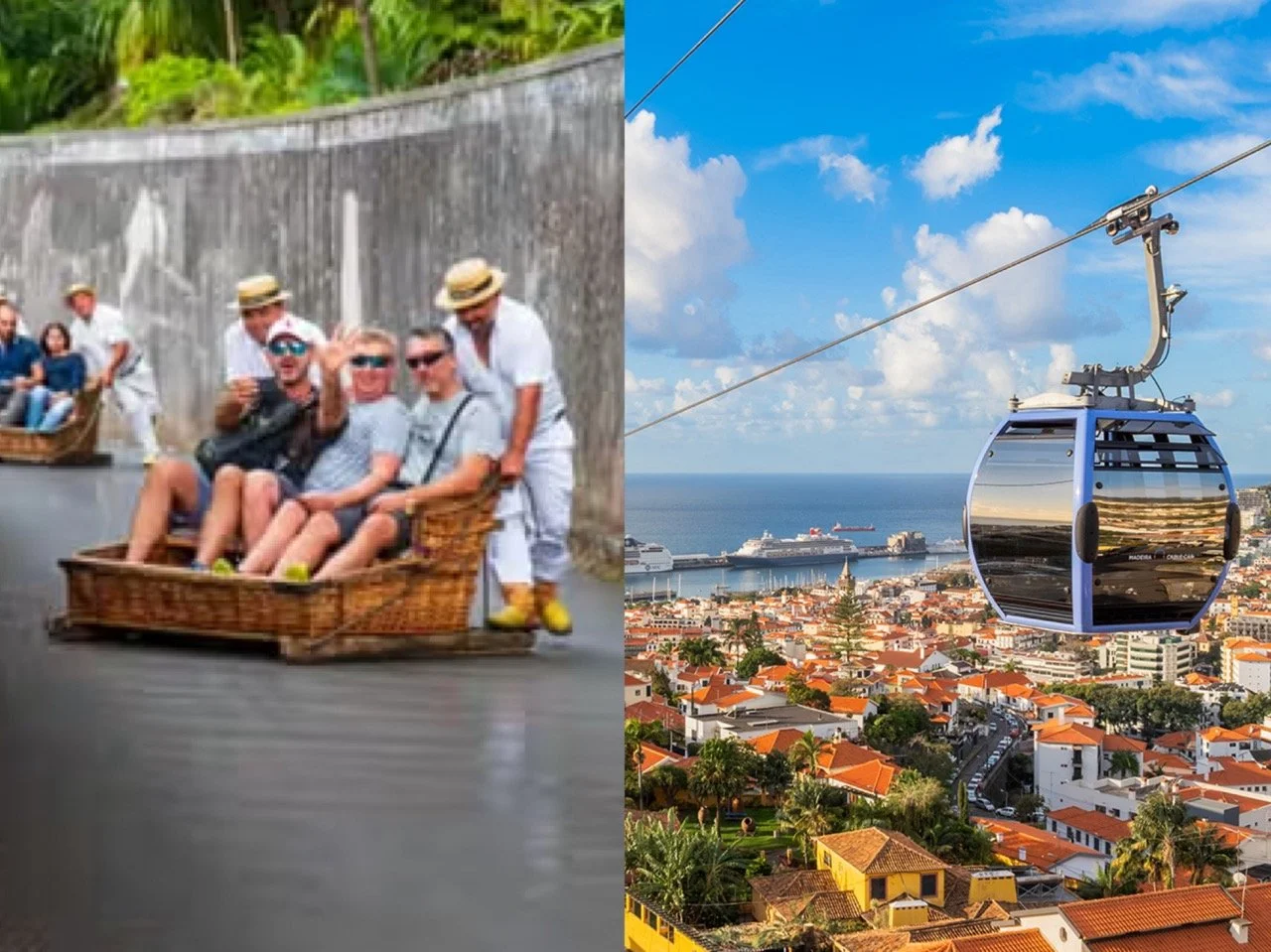
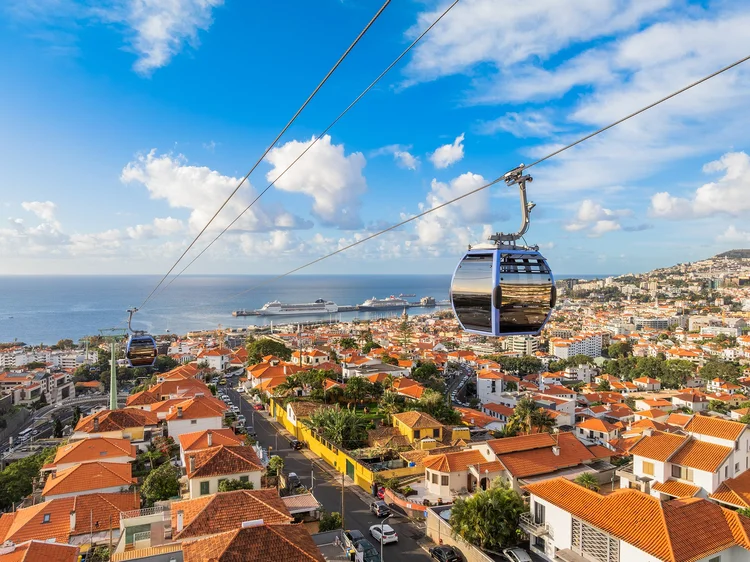
The Funchal cable car lifts you out of the Old Town and up to Monte in about fifteen minutes, climbing 560 metres over rooftops, banana terraces and the whole sweep of the bay. Go on a clear morning and take the seat facing back down the hill.
At the top, the Monte Palace Tropical Garden is genuinely outstanding: camellias, orchids, koi ponds and a collection of Portuguese tiles laid out down a steep hillside. Allow ninety minutes rather than the half hour most people plan for.
Coming back down in a wicker basket
The Monte wicker toboggan is a two-seat basket on greased wooden runners, steered by two men in straw hats and white cotton, down two kilometres of public road. It started in the 1850s as a way for residents to get into town quickly and it never stopped. Children love it. Adults are usually surprised by how much they love it.
It ends at Livramento, not in the Old Town, so plan on a taxi or the bus for the last stretch back.
Whale and Dolphin Watching
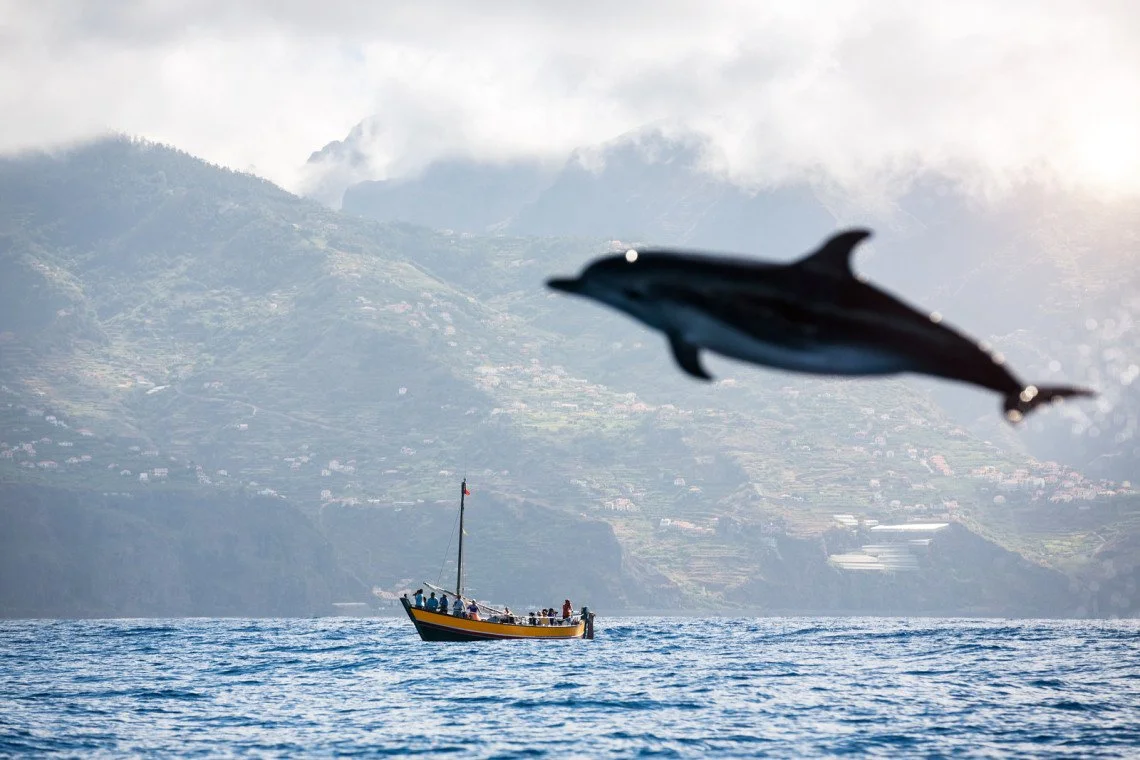
The water drops to two thousand metres within a few miles of the coast, which is why Madeira has one of the most reliable cetacean records in Europe. Resident bottlenose and common dolphins are here all year. Sperm whales are sighted regularly. Pilot whales, Bryde's whales and the occasional blue whale are seasonal.
Half-day boats leave from Funchal marina, most of them crewed by marine biologists who log every sighting for the island's research programme. Sightings are typically reported on nine trips out of ten, though nobody sensible guarantees a wild animal. Mornings are calmer than afternoons.
The West Coast Drive
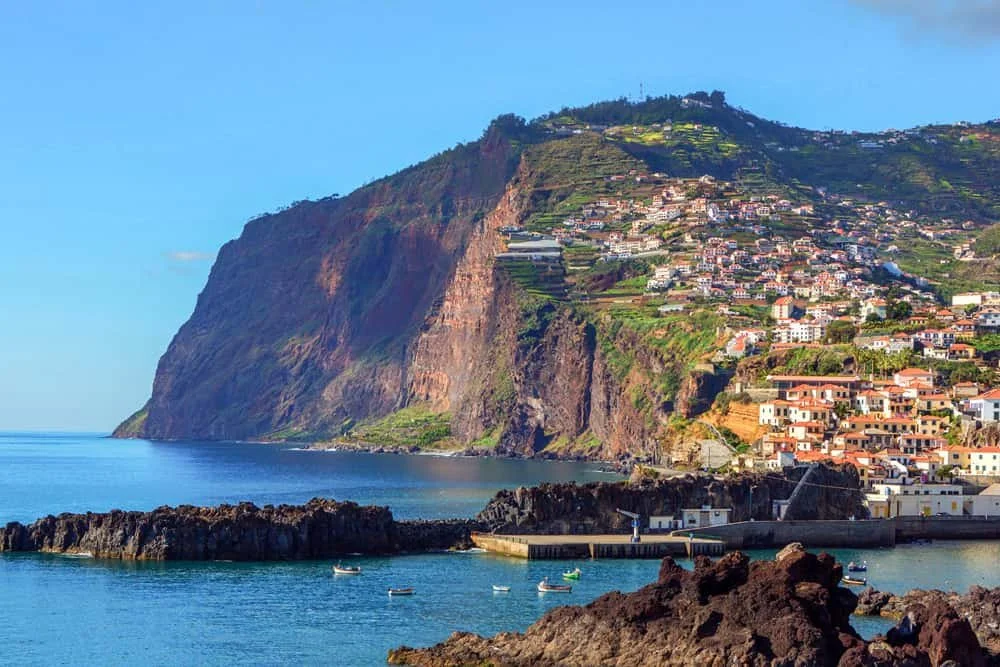
One road, three stops, and the best half day you can have with a hire car. The VR1 motorway makes the whole run from Funchal to Calheta about forty five minutes of actual driving, so this is a relaxed day rather than a route march. Take the old coast road for the last stretch if you have time.
Câmara de Lobos
Fifteen minutes west of Funchal, and the village Churchill came to paint in 1950. The harbour is genuinely unchanged: brightly painted xavelha fishing boats hauled up on the shingle, pastel houses stacked behind them, and the men who fish black scabbard at night drinking poncha in the morning. Have one at a hole-in-the-wall bar on the square.
Cabo Girão
580 metres of sheer cliff, among the highest in Europe, with a glass floored skywalk cantilevered out over the drop. It is free, it takes twenty minutes, and it is worth every one of them.
Go before eleven. The coach tours arrive mid morning and the platform holds a limited number of people at a time, so the queue can run to half an hour by noon.
Calheta
Madeira's two sandy beaches are here, both of them imported and both of them lovely, with a marina, a working rum distillery at Engenhos do Norte and a contemporary arts centre, MUDAS, whose free exhibitions are better than they have any right to be. Lunch on the marina, then carry on to Paúl do Mar for the sunset at number ten.
A Morning at Mercado dos Lavradores
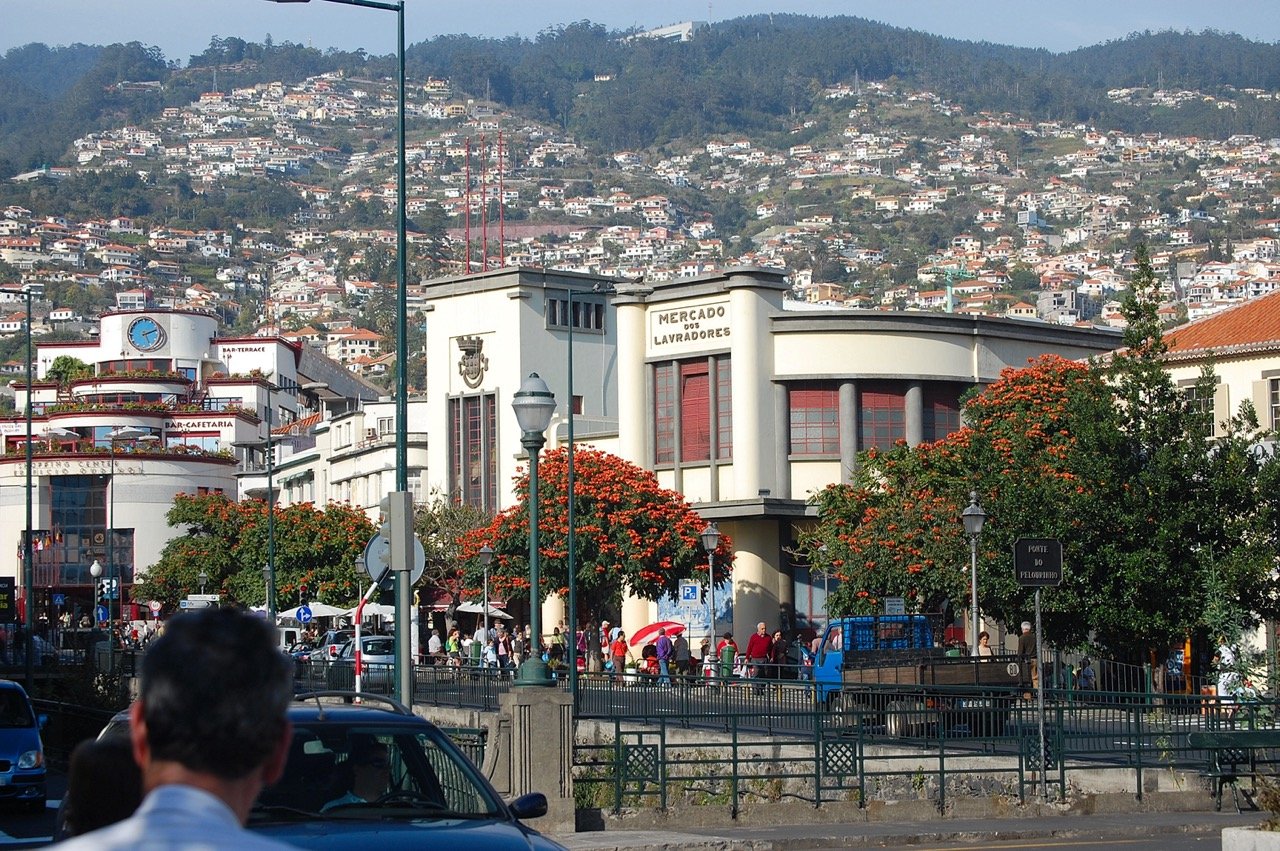
Funchal's covered market opened in 1940 and is still the best place on the island for tropical fruit, cut flowers, spices, embroidery and Madeira wine. The building itself is worth the trip: two storeys of azulejo tiling around an open courtyard, with the fish hall off to one side where the black scabbard comes in.
Arrive before nine on a weekday. The flower sellers in traditional dress are at the entrance, the traders are still setting up, and you get the market rather than the performance. By eleven it is mostly tour groups being sold sliced fruit at four euros a plate, so taste before you agree to anything.
The Old Town and the Painted Doors
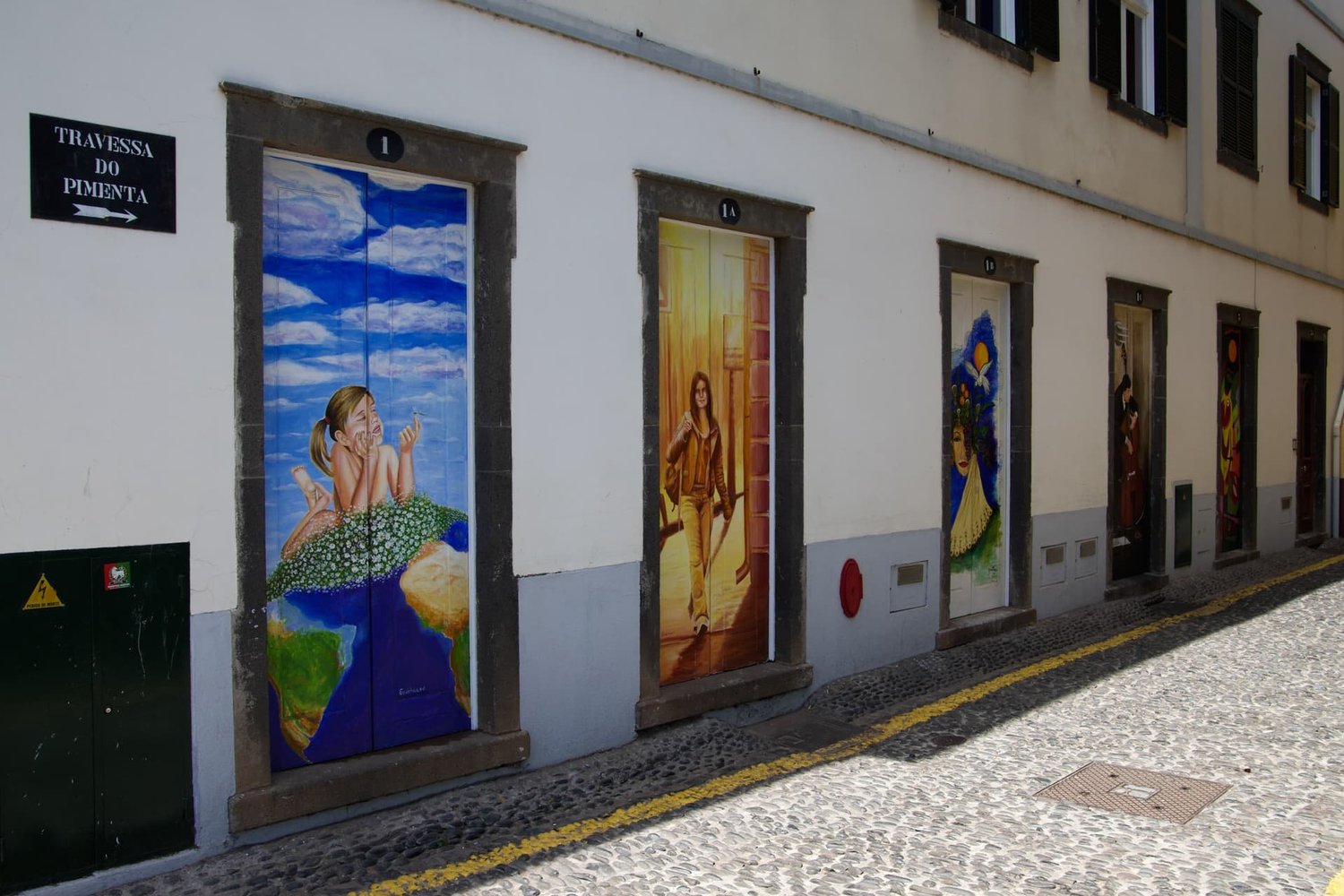
Rua de Santa Maria is the oldest street in Funchal, and since 2011 the Portas e Janelas project has turned its doorways into an open air gallery. Every door is different and each one was painted by a different artist, some of them famous locally and some of them fifteen years old at the time. There are more than two hundred.
Late afternoon is the moment: the light comes down the street, the restaurants put their tables out, and the doors that were closed all morning are the ones with the paintings on them. Stay for dinner and a poncha afterwards.
The Volcanic Pools at Porto Moniz
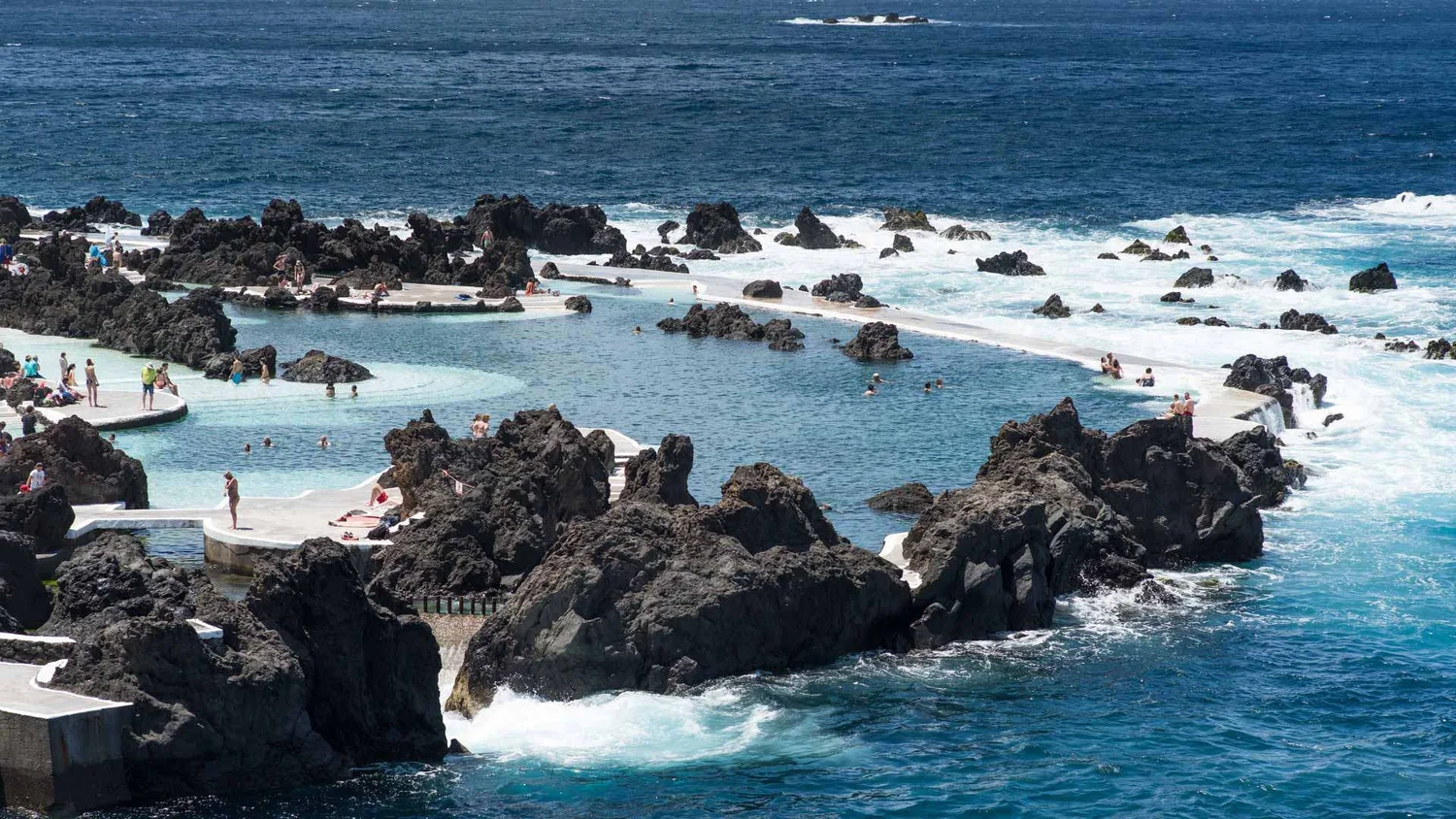
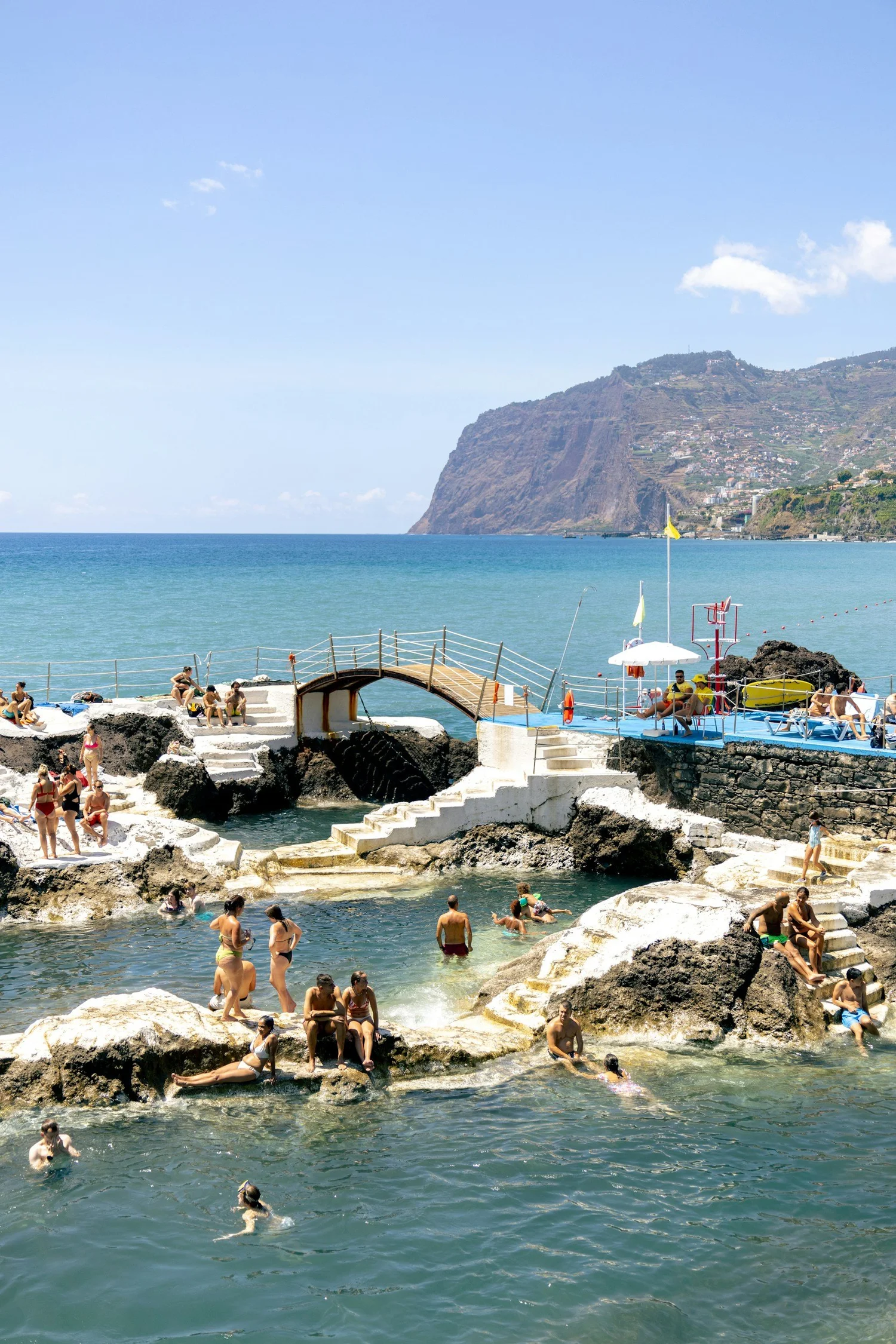
At the north west tip of the island, lava that met the sea left a run of natural basins in the basalt. They are now maintained as swimming pools, with walkways, ladders, showers and a lifeguard, and they fill and empty themselves with the tide. The water is Atlantic and it is honest about it.
Swimming here on a sunny afternoon, with the ocean breaking over the outer rocks a few metres away, is one of the things people remember longest about Madeira. It is about an hour and a half from Funchal by car. Go on a calm day: in a north swell the pools close and the drive is wasted.
Ponta de São Lourenço on the PR8
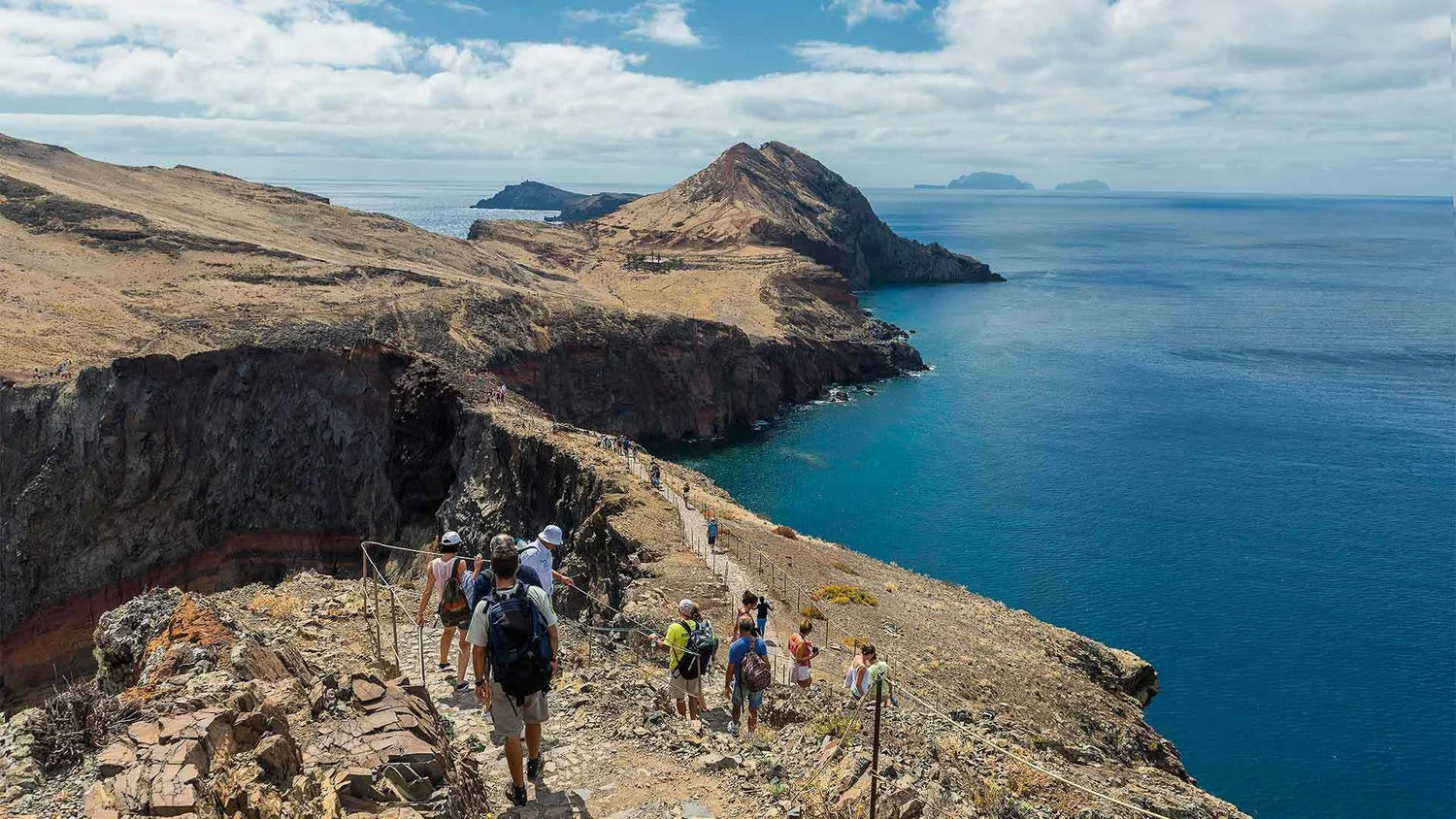
The eastern peninsula looks like a different island. There is no laurel forest and almost no shade: instead you get low wind-bitten scrub, layered volcanic rock in reds, ochres and blacks, and cliffs dropping straight into clear turquoise water on both sides at once.
The PR8 runs eight kilometres there and back along the spine of it. It is not steep but it is exposed, so take more water than you think and do it early or late rather than at midday. Booking through SIMplifica costs 4.50 euros. It is about forty minutes from Funchal.
Tasting Madeira Wine Properly
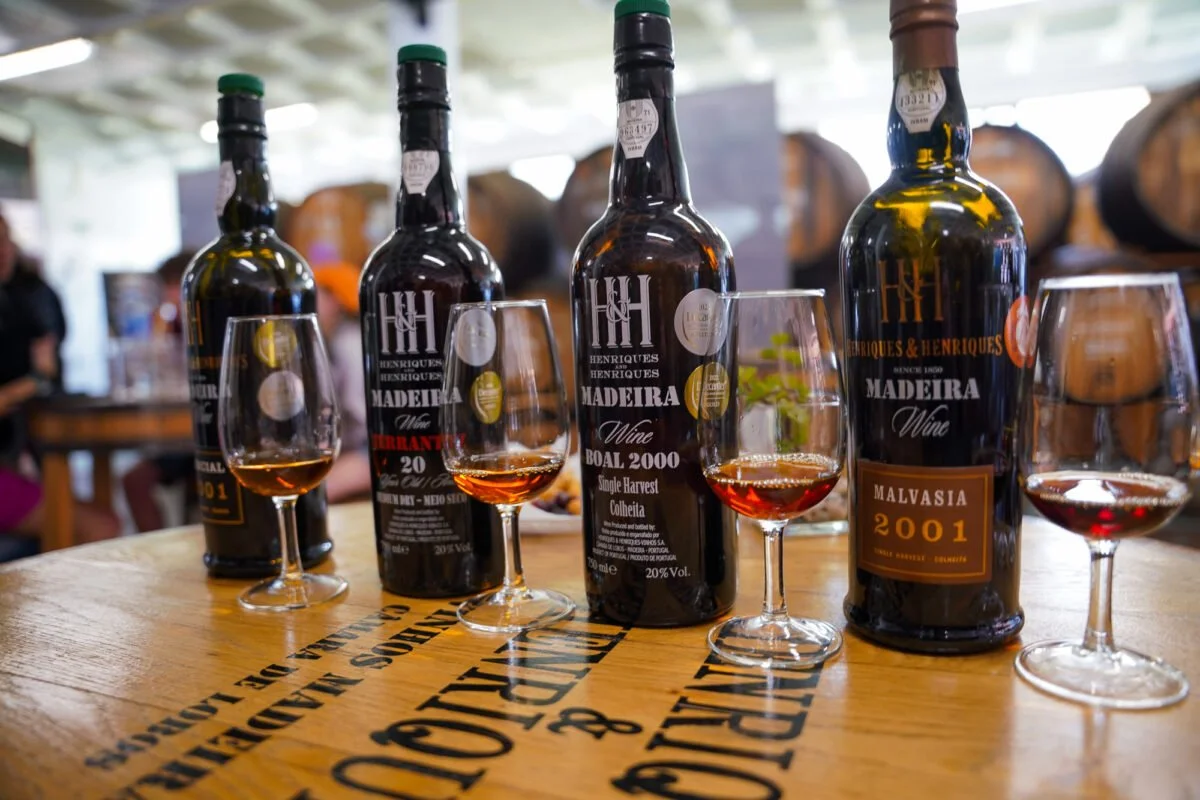
Madeira is one of the world's great fortified wines and the only major region that ages its wine with heat rather than protecting it from heat. That is why an opened bottle keeps for months and why hundred year old vintages are still on sale. Four grapes run dry to sweet: Sercial, Verdelho, Bual, Malmsey. Taste all four in that order and you will know which one is yours by the end of it.
Blandy's Wine Lodge on Avenida Arriaga is the place to start, in a seventeenth century convent building five minutes from the cathedral, with guided tours through the lodges and a tasting room that will open old vintages by the glass.
Eating your way round the island instead? Start with traditional Madeiran food and where to eat it, then the best restaurants in Funchal, from tin-roof grill houses to the island's two Michelin stars.
Sunset from the West Coast
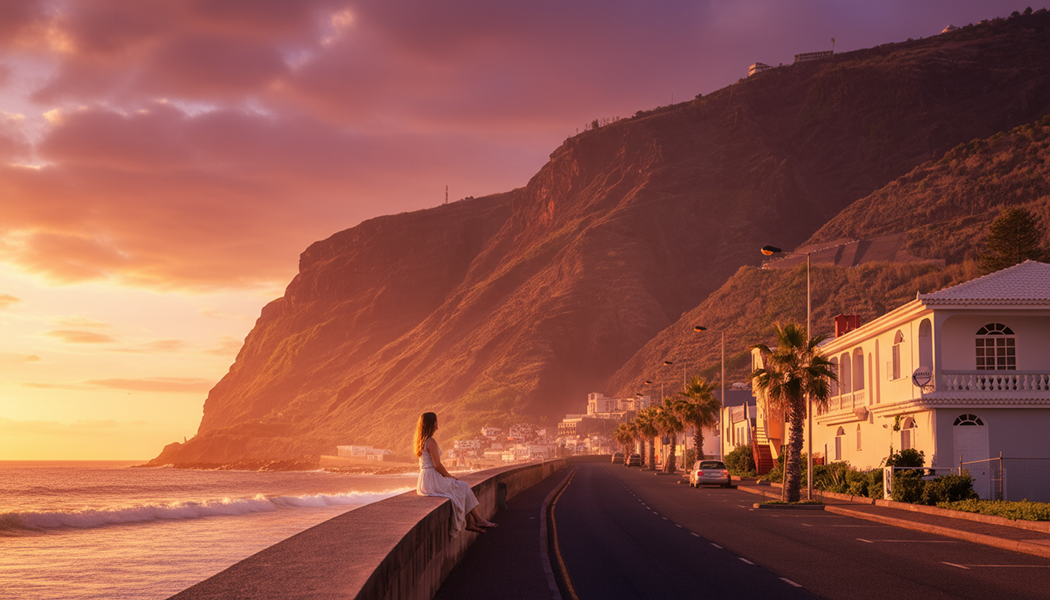
Funchal faces south, which is lovely all day and gives you nothing in the evening. The west coast faces the open Atlantic with nothing between it and America, and that is where the sunsets are. Paúl do Mar is our own village and the one we would send you to: black basalt cliffs, a sea wall, and the sun going down at the end of the street.
Take a seat at Bar de Pedra, built into the rocks at the water's edge, order a poncha and stay for the twenty minutes after the sun has actually gone, which is the part most people miss.
Things to Do in Funchal Itself
Most of the ten above need a car or a boat. If you are staying in the capital and want a day that starts at the front door, the Sé is five minutes from the Old Town and has a ceiling of Madeiran cedar worth walking in for; Santa Catarina Park is free, quiet before nine, and looks straight down onto the harbour; and an evening poncha in the Zona Velha costs about four euros and is the single most Madeiran thing on this page.
Beyond that, these are the local team's own picks, all within reach of the Old Town.
Things to Do in Madeira: Your Questions
What is Madeira most famous for?
Levada walks through laurel forest, Madeira wine, the New Year's Eve fireworks over Funchal bay, which are among the largest in the world for a population this size, and mountain and coastal scenery that is dramatic out of all proportion to the island's size.
Is Madeira good for families?
Yes, and it is easier than people expect. The cable car and toboggan, the Lido sea pools, whale watching, the market and the gentle levadas such as PR11 all work well with children. The one thing to plan around is the driving: the roads are steep and the tunnels are long, so break longer trips in half.
What is there to do in Madeira in the rain?
Mercado dos Lavradores, Blandy's Wine Lodge, the MUDAS contemporary art museum at Calheta, the volcanic caves at São Vicente and a long lunch in the Old Town. Rain in Funchal is usually a passing shower rather than a day, and the south coast is often dry while the north is not, so check the other side of the island before writing the day off.
How many days do you need in Madeira?
Five days covers the ten things on this page at a comfortable pace with one full day for a long levada. Seven lets you add the north coast, Santana and a second big hike without moving at speed. See the 5 day itinerary or the 7 day itinerary.
Do you need a car to do these things?
For the west coast drive, Porto Moniz, Ponta de São Lourenço and the west coast sunset, a car is much the easiest option. Everything else is reachable from Funchal on foot, by bus or on an organised trip. If you would rather not drive at all, our guide to staying in Madeira without a car sets out where to base yourself and how to manage.
Where to Stay for All of This
This guide runs the length of the island, so where you base yourself decides which half of it is easy. Funchal puts the market, the cable car, the Old Town, the wine lodges and the whale boats within walking distance. Paúl do Mar puts the west coast drive, Porto Moniz and the sunset on your doorstep and the capital fifty minutes away. All nine homes are ours, booked direct with the local hosts, with no booking fee.
Three guides that go with this one
 Itineraries
Madeira 7-Day Itinerary
All ten of these set out day by day, with the driving times and the order that actually works.
Read guide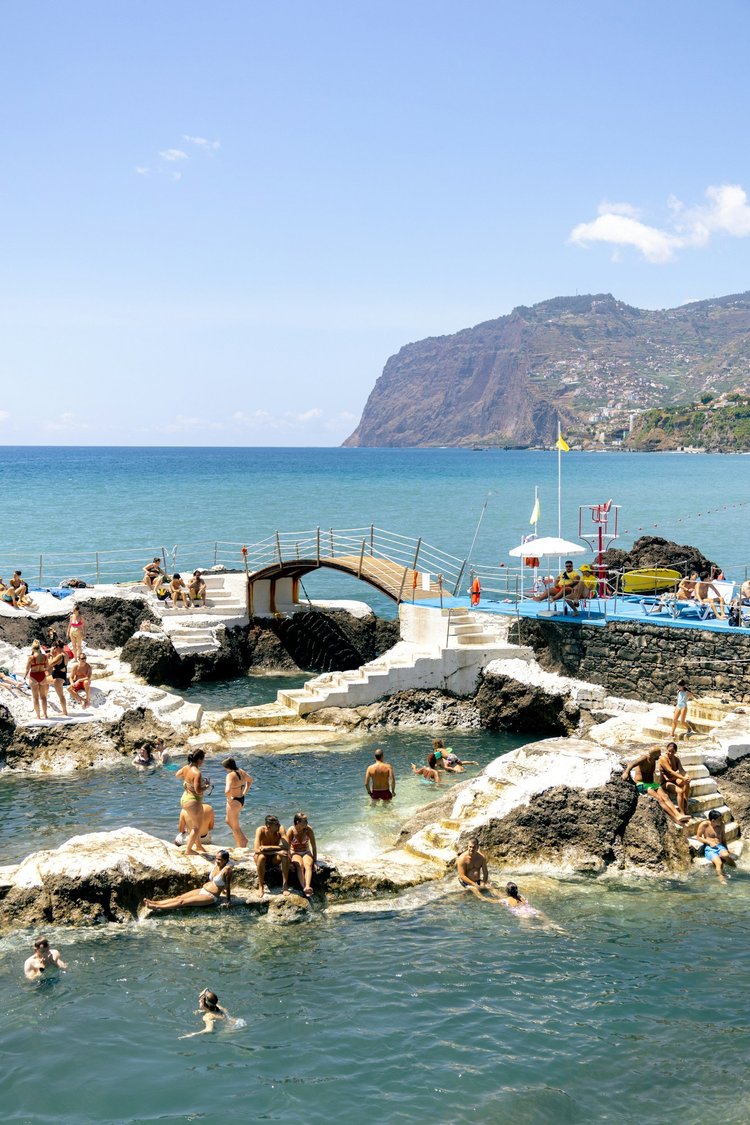 Plan
Best Time to Visit Madeira
Month by month on temperature, rain, crowds and what is on, with the honest trade-off for each season.
Read guide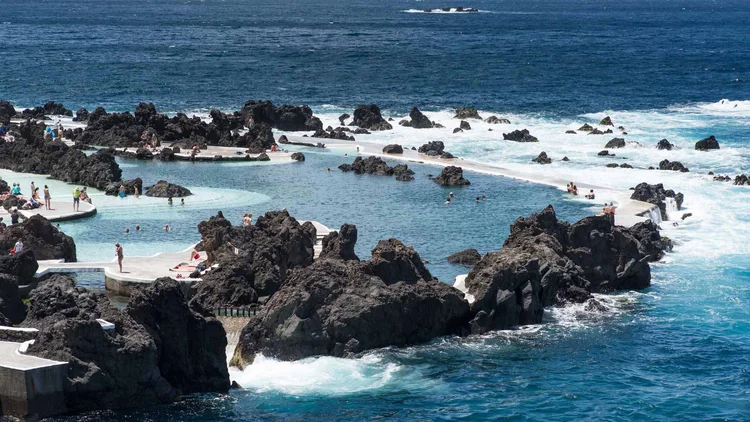 Experiences
Best Hikes and Levada Walks
Number one on this page, in full: every route worth the drive and how hard it really is.
Read guide