Madeira 7-Day Itinerary: The Perfect One Week in Madeira
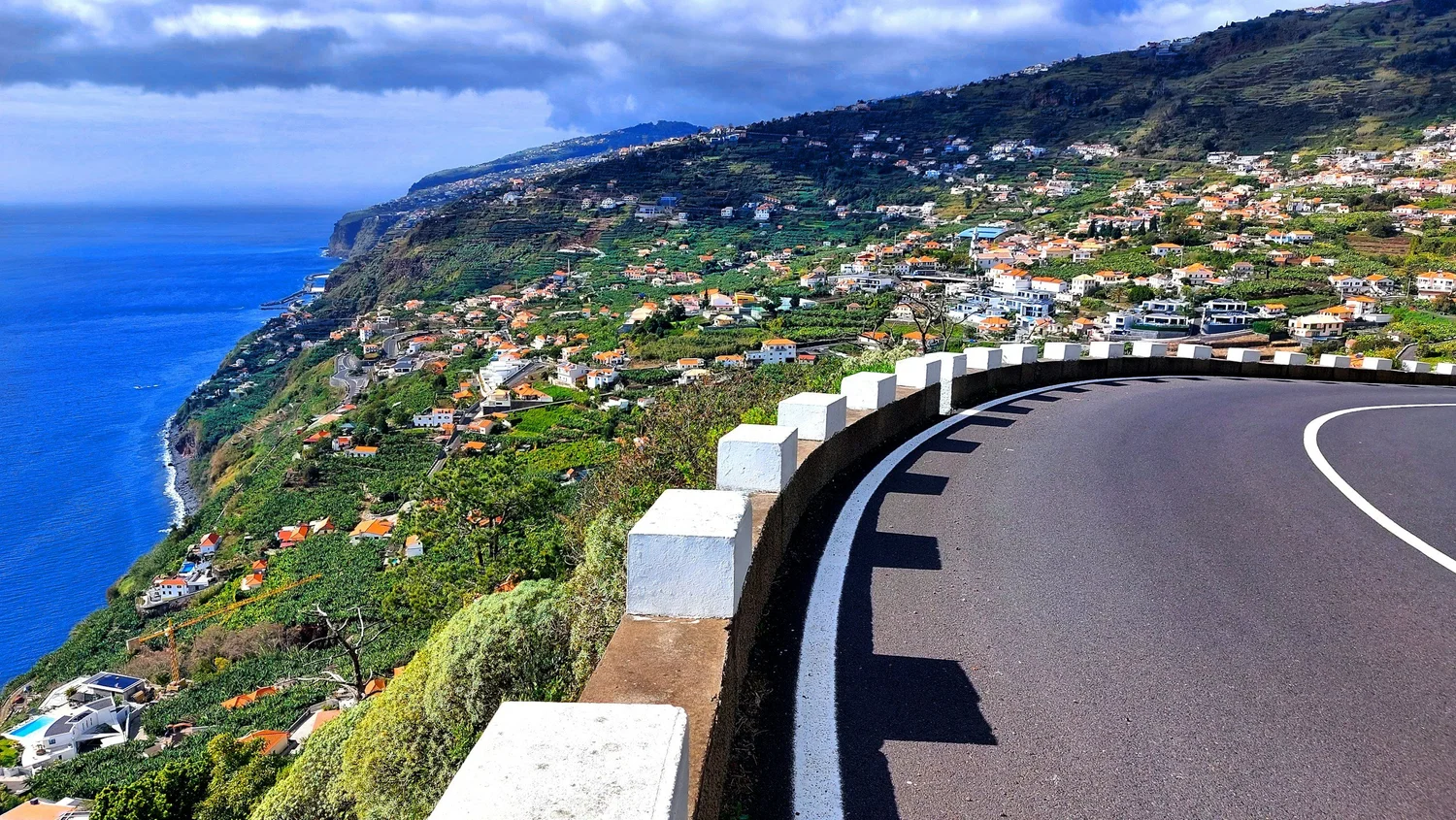
Seven days is the length Madeira is actually built for. It is long enough for two serious walks, a full day in Funchal, the drive out to the far west and a north coast day, and short enough that you never quite run out of island. This is the week we give guests who ask, written around a Funchal base with one optional night on the west coast, and every day has a wet weather answer under it because in a place with this much vertical the forecast is a suggestion.
One week in Madeira, day by day
- Day 1. Land, drop the bags, walk the Old Town and the marina, eat early.
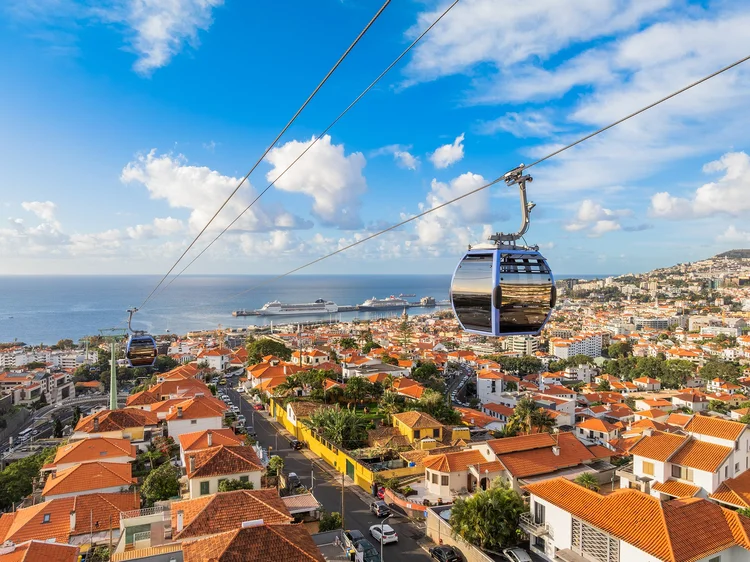
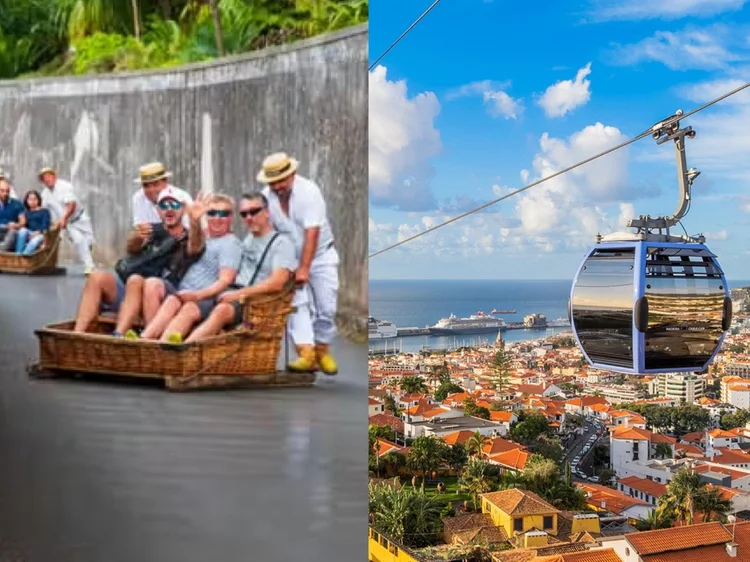
- Day 2. Funchal proper: the cable car up to Monte, the toboggan down, the market after two.
- Day 3. Your first levada, either Caldeirão Verde or 25 Fontes. Booked before you flew.
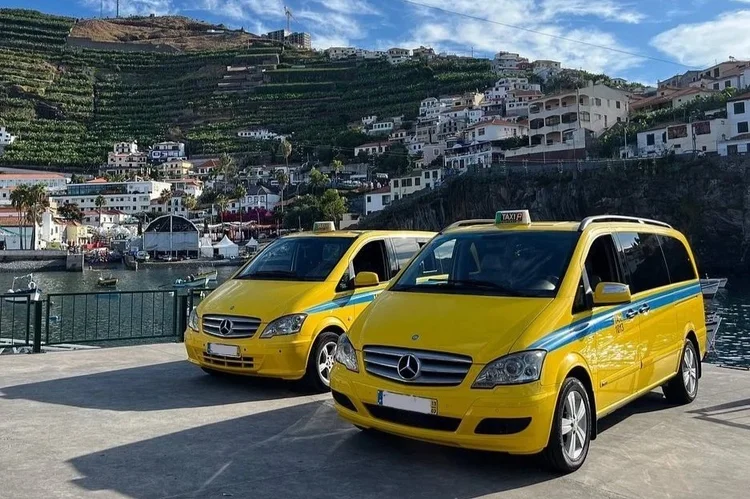
- Day 4. The south west coast by car: Câmara de Lobos, Cabo Girão, lunch and a swim at Calheta.
- Day 5. The far west: Paúl do Mar, Jardim do Mar, and the option of sleeping out there.
- Day 6. PR1, the ridge from Pico do Arieiro to Pico Ruivo. The big one.
- Day 7. The north coast: Santana, São Vicente, and the lava pools at Porto Moniz.
Two things to do before you fly: hire a car, and book Day 3 and Day 6 through SIMplifica. Everything else on this page can be decided over breakfast.
How This Week Is Built, and Why It Stays in One Place
Madeira is 57 kilometres end to end and it takes all day to cross, which is the fact that decides an itinerary. The roads are excellent, almost entirely tunnels and viaducts on the south side, but the interior is 1,800 metres of mountain and the north coast is a different climate from the south. Nothing here is far. Everything here is slow.
So this week keeps one base and drives out from it. Funchal for six or seven nights puts every trailhead within ninety minutes, every restaurant within walking distance of your door, and the airport twenty minutes away at both ends of the trip. Moving hotels twice in seven nights costs you two half days of packing and gains you about forty minutes of driving, which is a bad trade on a week this short.
The one move worth making is a single night on the west coast between Day 4 and Day 5, which turns the longest drive of the week into two short ones and buys you a sunset and a morning in a village most people see for ninety minutes. It is optional, and the table below shows the week both ways.
| Day | The day | Where you sleep | Driving |
|---|---|---|---|
| 1 | Arrive, Old Town, first dinner | Funchal | Airport transfer only |
| 2 | Cable car, Monte, the market | Funchal | None, walk and ride |
| 3 | Levada walk, PR9 or PR6 | Funchal | 1 h to 1 h 20 each way |
| 4 | Câmara de Lobos, Cabo Girão, Calheta | Funchal or Paúl do Mar | About 1 h spread over the day |
| 5 | Paúl do Mar and Jardim do Mar | Funchal or Paúl do Mar | 1 h each way from Funchal |
| 6 | PR1, Arieiro to Ruivo | Funchal | 45 min each way |
| 7 | Santana, São Vicente, Porto Moniz | Funchal | 2 h 30 as a loop |
What the table cannot say is that Days 3 and 6 are weather dependent and Days 4 and 7 are not. Keep the two walking days loose and swap them with a driving day if the mountain is in cloud.
A hire car is assumed from Day 3 onward. If you would rather not drive at all the week still works, but it becomes a different week: see staying in Madeira without a car, which rebuilds this itinerary around buses, taxis and guided days.
These are the two operators our guests use for the car and the airport run, and the walking company that solves a one way trail day without a second driver.


Land, Drop the Bags, and Walk
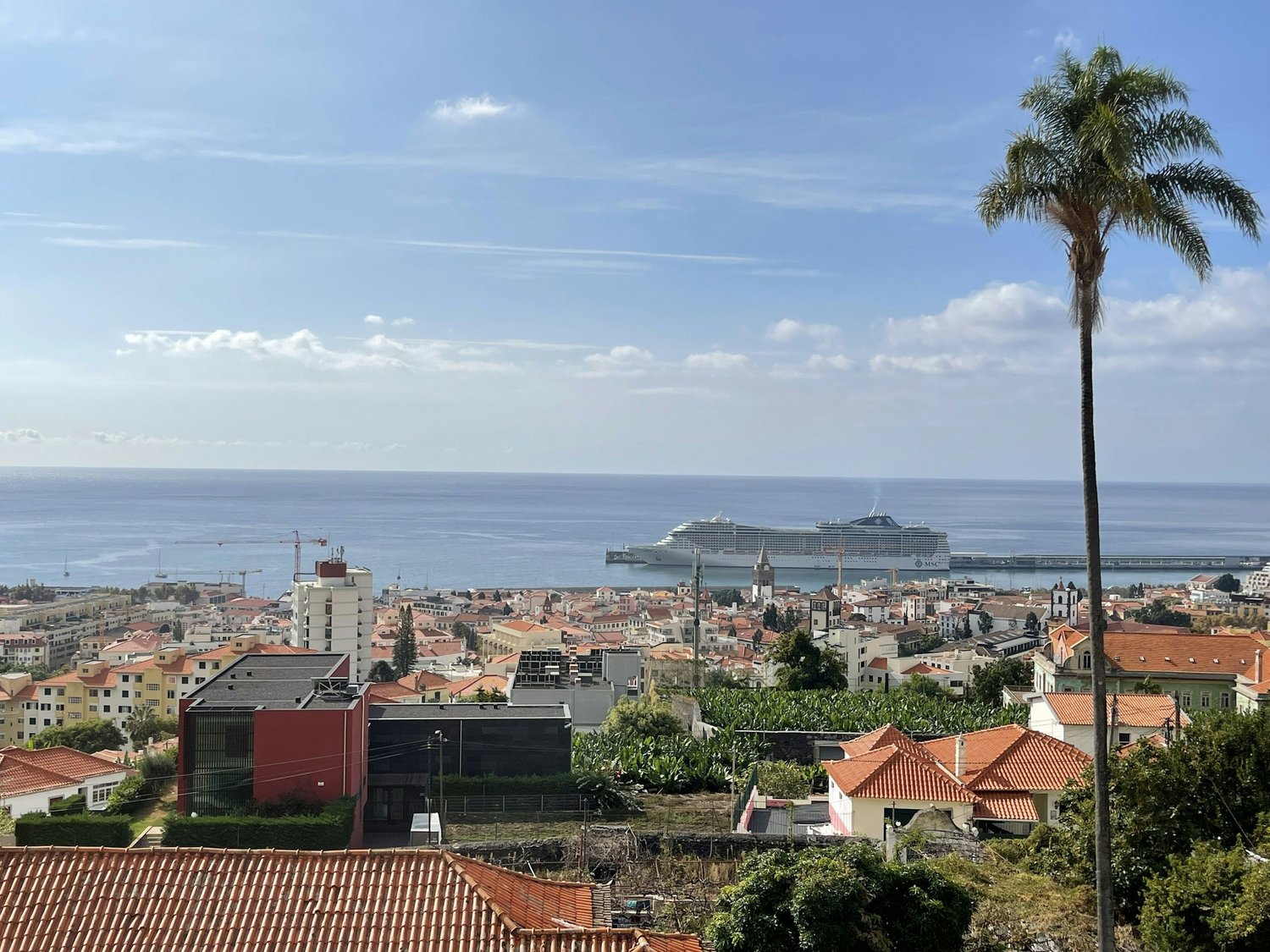
Do not plan anything for the first afternoon. Madeira Airport is about twenty minutes east of central Funchal and a taxi runs 25 to 30 euros, so you can be checked in and out again on foot inside an hour of landing. Every option, including the airport bus and the case for collecting the hire car on Day 3 rather than Day 1, is laid out in the airport transfer guide.
The walk that orientates you is this one, and it takes about two hours with stops. Down to the marina, east along the seafront to the Zona Velha, up through the painted doors of Rua de Santa Maria, then back west along Rua da Carreira. That loop gives you the shape of the city, the harbour on one side and the mountain rising behind, and after it you will know where you are for the rest of the week.
Eat early and eat local. Peixaria da Avenida for whatever came in that morning, or O Giro on Rua da Carreira for the version of Madeiran cooking a resident would order. Both are the kind of first dinner that sets expectations correctly for the week, and both are covered in more depth in where to eat in Funchal.
If you land after eight, skip the restaurant and buy bread, cheese, a bolo do caco and a bottle of Verdelho on the way to the flat. Every one of our Funchal homes has a table worth eating at and the first night is better spent sitting still.
Funchal from Above: the Cable Car, Monte and the Market
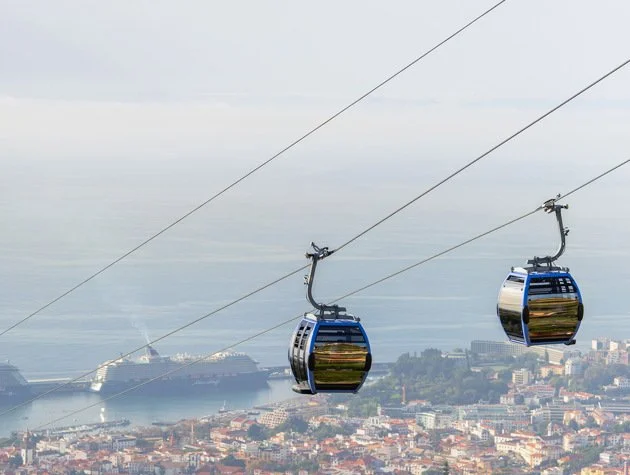
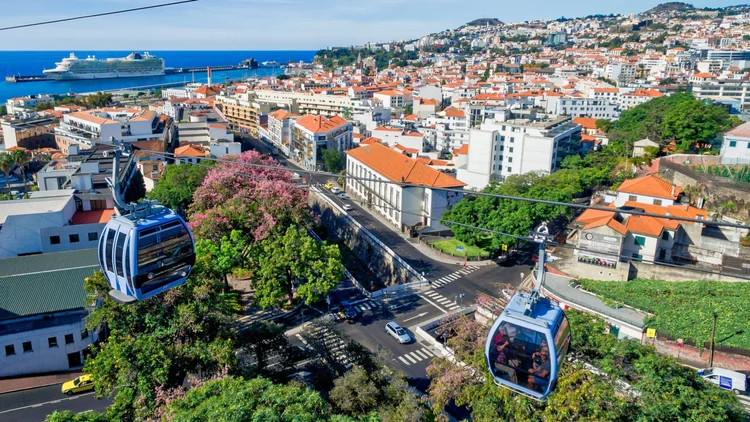
Go up first and go early. The Funchal cable car leaves from the Old Town and climbs 560 metres to Monte in about fifteen minutes, and the whole city, the bay and the cruise ships lay themselves out under the floor of the cabin as you go. On a clear morning it is the single best fifteen minutes in Funchal. By eleven the cloud has usually come up the valley and the queue has come up with it.
At the top, the Monte Palace Tropical Garden is the reason most people stay an hour longer than they meant to: it is built down a ravine in terraces, with koi ponds, Japanese bridges, tilework and a museum of African sculpture, and it is genuinely worth the entry. The church of Nossa Senhora do Monte is a two minute walk from the top station, and the last emperor of Austria is buried in it, which is a strange sentence to write about a village above Funchal and is nonetheless true.
The toboggan, and whether to do it
The Monte toboggan is a wicker basket on wooden runners, pushed and steered down two kilometres of public road by two men in white cotton and straw hats. It is not a ride in a theme park sense, it is a real descent on a real street with cars on it, it lasts about ten minutes, and it has been running since the 1850s when it was how people actually got to town. Do it. Then take a taxi or the bus the rest of the way down, because the toboggan stops at Livramento and not in the city.
The market, after two o'clock
Mercado dos Lavradores is at its worst between ten and one, when four cruise ships of people are being handed slices of passion fruit at inflated prices on the ground floor. Come at half past two instead. The fish hall downstairs is still working, the tuna and the black scabbardfish are still being cut, the flower sellers are still there, and nobody will chase you up the stairs. It closes around four, and it does not open on a Sunday.
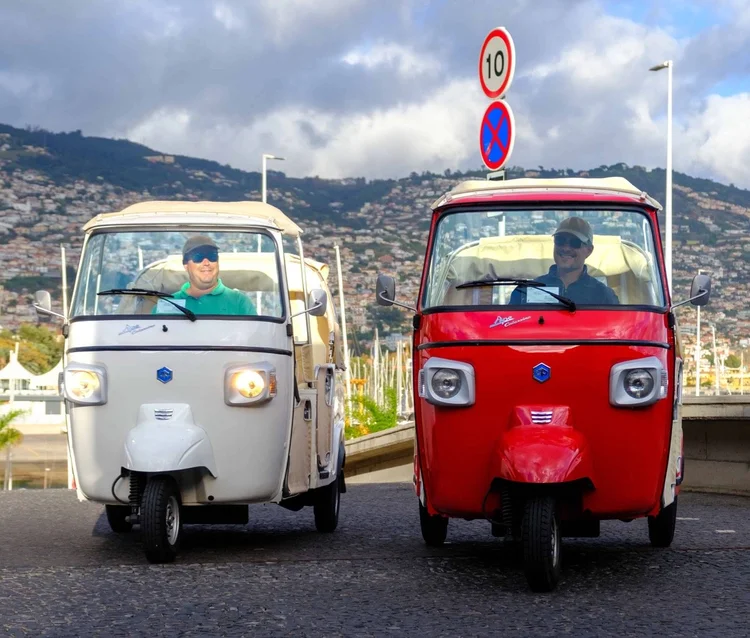
Three things on this day are worth booking rather than turning up for, and all three are on the /experiences pages with times and prices.
Your First Levada: Caldeirão Verde or 25 Fontes

A levada is an irrigation channel, cut by hand from the wet north of the island to the dry south, and the maintenance path beside it is why Madeira walks the way it does: contour lines rather than climbs, water on one side, forest or a 200 metre drop on the other. Two of them are the right first walk on a week like this, and you should pick one rather than try both.
Both trails are classified PR routes and since January 2026 both need an advance booking through the regional SIMplifica portal. The fee is 4.50 euros a person, the slot is tied to a date, and summer dates go. The step by step is in our SIMplifica booking guide.
Levada do Caldeirão Verde
13 kilometres there and back from Queimadas, four to five hours, and almost flat the whole way. It runs through laurisilva, the laurel forest that has been on these slopes since before the last ice age, and finishes at a waterfall dropping into a green amphitheatre of rock. There are four unlit tunnels on the way, some of them long enough that you cannot see either end, so a head torch is not optional. This is the more atmospheric of the two.
Levada das 25 Fontes and Risco
11 kilometres return from Rabaçal, three and a half to four and a half hours, and the most photographed end point on the island: a wide pool in a rock bowl with two dozen springs coming out of the wall above it. It is busier than PR9 and the descent from the car park to the trail is steep enough that you will notice it on the way back up. This is the more spectacular of the two.
Both are covered properly, along with four more, in the best hikes and levada walks in Madeira. If you would rather not drive to a trailhead and back after five hours on your feet, a guided day with Hiking Madeira takes the transport and the permit off your hands.
West Along the South Coast: Câmara de Lobos, Cabo Girão and Calheta
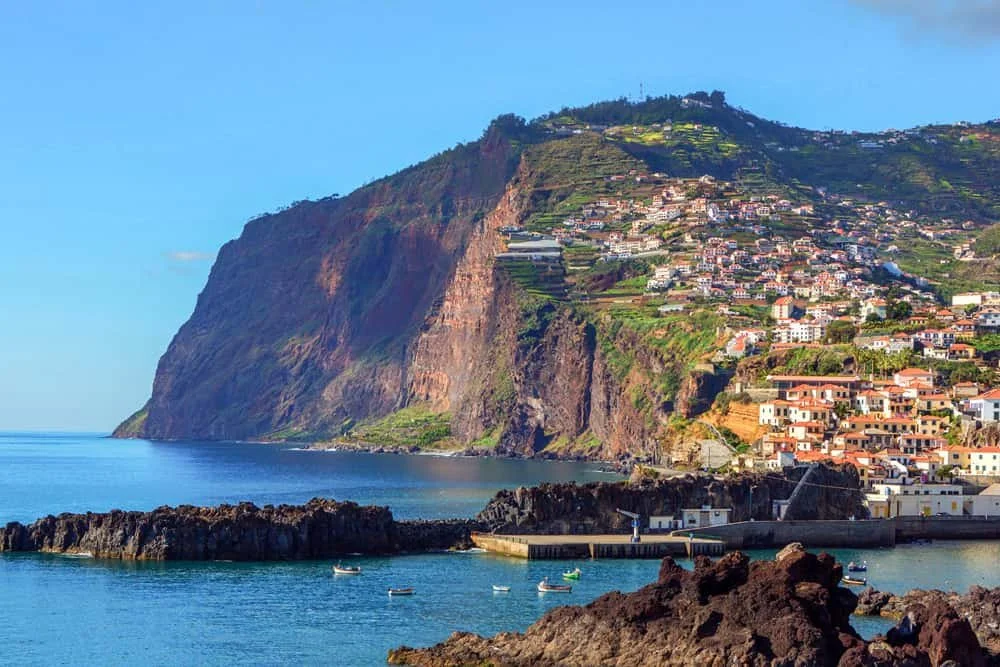
This is the recovery day after the levada, and it is all short drives with long stops. The whole run is under an hour of actual driving spread across the day, and the Via Rápida does most of it in tunnels, so you surface at each village rather than winding down to it.
Câmara de Lobos, twenty minutes out, is a working fishing harbour with painted boats pulled up on the shingle and the bars around it that invented poncha for the fishermen who used them. Churchill painted the bay from the promontory on the east side in the 1950s and there is a plaque where he set up. Have a poncha at eleven in the morning like everyone else there, it is that kind of place.
Cabo Girão, ten minutes further, is one of the highest sea cliffs in Europe at 580 metres, and there is a glass floored platform cantilevered off the top of it. Standing on glass with 580 metres of nothing underneath is either the best two minutes of the day or a hard no, and you will know which within about four seconds. Go before eleven or after four if you would rather not share it with three coaches.
Calheta, forty five minutes from Funchal, is where the afternoon goes. It has one of the island's only two golden sand beaches, imported grain by grain from Morocco and held in place by two breakwaters, which makes it the easiest swim on the south coast and the only one that involves actual sand. Lunch on the marina, swim, and either turn back or carry on west.
This is the day to decide about the west coast night. Carrying on twenty minutes past Calheta puts you in Paúl do Mar for the evening instead of driving an hour back to Funchal and an hour out again tomorrow. The three cottages down there are in where to stay in Paúl do Mar.
The Far West: Paúl do Mar and Jardim do Mar
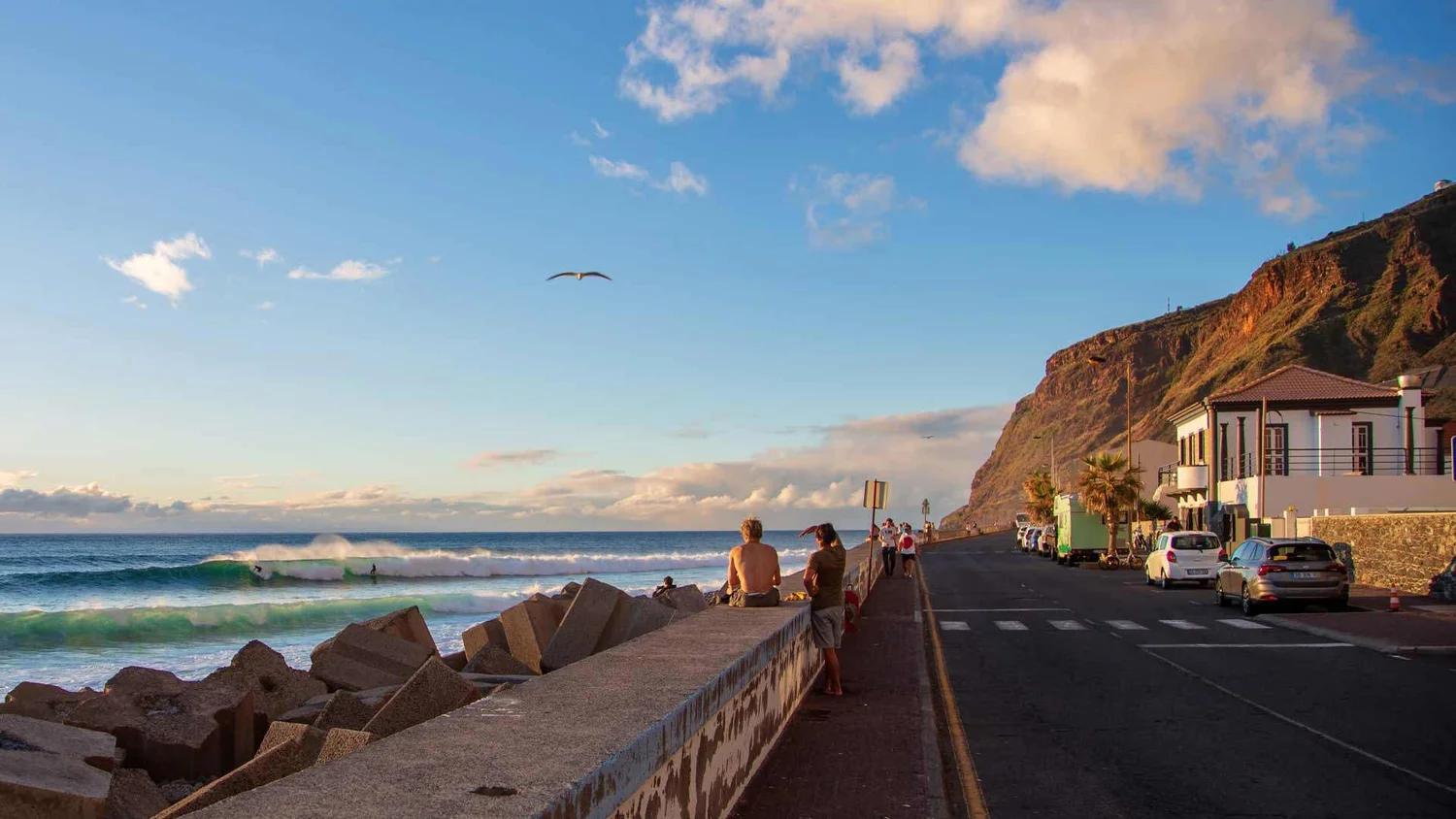
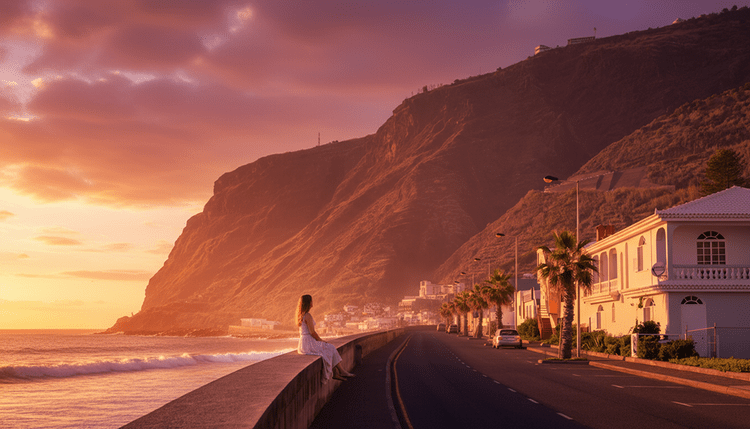
Past Calheta the road climbs to Prazeres on the plateau and then goes into the cliff. You drive down through a tunnel bored inside the rock and come out at sea level in Paúl do Mar, a few hundred people on a shelf of land with 300 metre walls behind them and the open Atlantic in front. It is the arrival everyone remembers and it is worth doing in daylight the first time.
The village is one seafront road, a black pebble beach, a small supermarket, a pharmacy and a handful of cafés. Bar de Pedra is built into the rocks at the water's edge and is where the village actually is in the evening. In autumn and winter the reef break out front is a serious wave and there will be people on it; in calm summer conditions the water in front of the sea wall is swimmable. Either way the afternoon here is deliberately unstructured, which after four days is the point.
Jardim do Mar, three minutes along
The next village west is smaller again, and it is the prettier of the two: cobbled lanes too narrow for a car, houses stacked on a headland, and a footpath along the cliff between the two villages if you want to walk rather than drive it. It has a café or two and no other reason to be there, which is the recommendation.
Why this coast is worth a night rather than an afternoon is its own guide, and so is the walk down into it.
PR1, the Ridge from Pico do Arieiro to Pico Ruivo

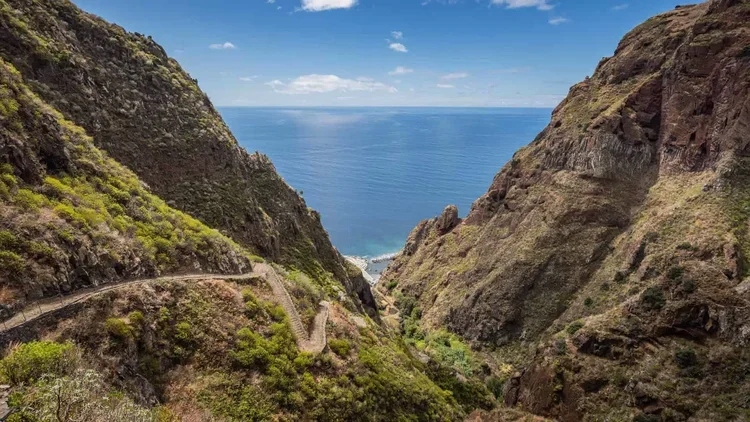
This is the walk people come back for. Nine kilometres one way from Pico do Arieiro at 1,818 metres to Pico Ruivo at 1,862, the island's highest point, along a ridge cut and tunnelled through volcanic rock with the cloud layer usually somewhere below you. Three and a half to five hours, moderate to strenuous, and 10.50 euros through SIMplifica rather than the 4.50 the levadas cost.
Two practical things decide the day. The first is that it is one way, so you either walk back the same route and double the day, or arrange a car at the Achada do Teixeira end, which is what a taxi or a guided group is for. The second is the start time: drive up for sunrise if you can face it, because the light on the ridge at six is the reason the photographs look like that, and because the cloud tends to build through the morning.
PR1 is the one that sells out. Summer slots go weeks ahead, the booking is dated, and there is no on the day desk at the trailhead. Book it the same week you book the flights.
Take warm layers whatever the forecast in Funchal says, a head torch for the tunnels, more water than feels necessary, and food. There is a shelter at Pico Ruivo and nothing else on the route. In cloud or high wind the correct decision is not to start: the ridge has real exposure and the alternative levada day is twenty minutes away.
The North Coast: Santana, São Vicente and Porto Moniz

The north is a different island: wetter, greener, steeper, and with the weather coming straight at it off two thousand miles of Atlantic. Drive over or through the middle and come out at Santana, do the coast west, and come back through the Encumeada pass. Two and a half hours of driving as a loop, and a full day with the stops.
Santana is where the palheiros are: small A-frame houses with steep thatched roofs painted red, white and blue, built like that because it sheds the rain and because the loft kept the crop dry. A handful are preserved by the roadside and one or two are still lived in.
São Vicente has the volcanic caves, a lava tube you walk through with a guide, and a volcanism centre attached that explains how the island got here. It takes about an hour and it is the best wet weather stop on the north coast, which is worth remembering because the north coast is where the wet weather is.
Porto Moniz, at the north west corner, is the finish: natural pools formed where lava met the sea, walled and filled by the Atlantic, with the waves breaking on the rock just beyond the edge. Swim in the afternoon sun, eat lapas and a plate of whatever is landed there, and drive home over the Paúl da Serra plateau, which on a clear evening is the best road on the island.
The north coast makes its own weather. It can be raining in São Vicente and dry in Funchal on the same afternoon, and that works in both directions: if the south is grey, the north is often the day worth having.
What to Change, and Who Should Change It
This week is written for two people on a first trip who can walk five hours and want to. Four adjustments cover almost everybody else, and none of them break the shape of it.
If you are travelling with young children
Swap Day 6 for a second coast day. PR1 is not a route to take a child on, and the honest alternative is not a shorter version of it but a different kind of day: the lava pools, the Lido promenade, and the flat, one hour Vereda dos Balcões, which has a viewpoint at the end and no exposure anywhere on it.
If you have five days rather than seven
Cut Day 4 and Day 7, keep one levada and keep the far west. That is more or less exactly what our five day itinerary does, and it explains the reasoning behind each cut.
If it rains for three days
It happens, mostly between November and February, and the answer is to go where the weather is not. The south west coast around Calheta and Paúl do Mar is the driest corner of the island, and the month by month picture is in the best time to visit Madeira.
If this is your second trip
Invert it. Base yourself on the west coast for the whole week, do Funchal as one day trip rather than two, and use the days you get back on Ponta de São Lourenço, the Rabaçal network and the villages on the north west corner. The case for that base is in why stay in Paúl do Mar.
Seven Days in Madeira, Answered
Is 7 days enough for Madeira?
Yes, and it is close to the ideal length for a first trip. Seven days covers Funchal properly, two of the headline walks, the west coast and the north coast without any day feeling rushed. Fewer than five starts forcing choices, and more than ten is usually a second kind of holiday rather than a longer version of this one.
Do you need a car for a 7-day Madeira itinerary?
For this itinerary, yes. Days 3 to 7 all start at a trailhead or a village that the bus either does not reach or does not reach early enough. It is possible to do a week in Madeira without driving, using guided days and taxis from a Funchal base, but it is a different itinerary and we have written it separately.
Should you stay in one place or move around Madeira in a week?
One base, with at most one night moved. The island is small enough that everything on this page is within ninety minutes of Funchal, so a second and third hotel costs you packing time and gains you very little driving. The one move that earns itself is a single night on the west coast, which turns the longest drive of the week into two short ones.
What is the best month for a week in Madeira?
April, May, September and October. The walking weather is at its best, the sea is warm enough from June onward, and you avoid both the August crowds and the wettest stretch from November to February. Madeira is a year round island rather than a seasonal one, so no month is wrong, but those four are the ones we would book.
How much walking is in this itinerary?
Two full days of it, Day 3 and Day 6, at four to five hours each. Day 1 and Day 2 are city walking of two to three hours, and Days 4, 5 and 7 are driving days with short stops. If you replace Day 6 with a coast day, the week has one serious walk in it rather than two.
Where to Stay for a Week in Madeira
Six of our nine homes are in Funchal, which is the base this week is written around: the Old Town and Rua da Carreira pair for walking out of your door to dinner, the Lido pair for the promenade and the sea pools, Santa Catarina for the Avenida do Infante and a sea view balcony, and Centro Mar in São Martinho for a longer stay with parking. The other three are the Paúl do Mar cottages, which are what the optional Day 4 night is booked in. All nine are booked direct with the hosts, and there is no booking fee.
Three guides that go with this week
 Areas
Best Places to Stay in Madeira
Every part of the island compared as a base, before you book the seven nights.
Read guide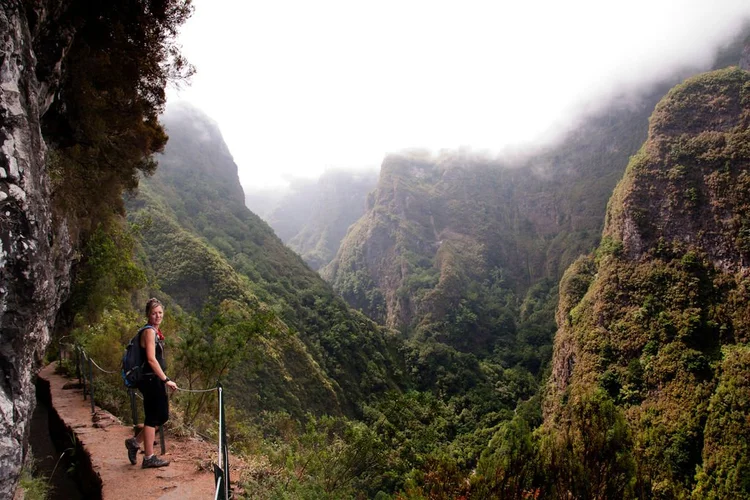 Hikes
Best Hikes and Levada Walks in Madeira
The six walks worth a whole day, ranked, with distances, times and fees.
Read guide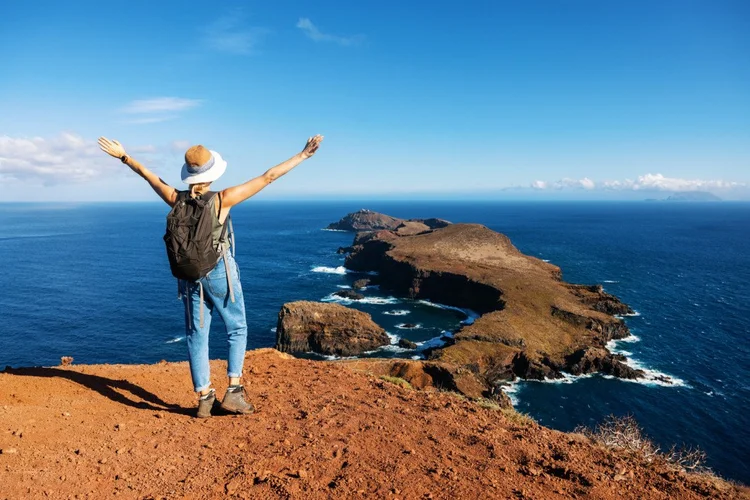 Itineraries
Madeira 5-Day Itinerary
The same island in five days, and which two days we would cut to get there.
Read guide